Low Sodium Dog Food and Treats: The Complete Management System for 2026
Updated: June 2026 · Covers Food, Treats, Pill Pockets, Homemade Options · Sodium Figures Verified · No Sponsored Content

Most owners who switch to low sodium dog food for a dog with heart disease or kidney disease make the same mistake: they spend weeks researching the right prescription kibble, get their dog eating it consistently, and then undo weeks of sodium management in a single afternoon with a handful of regular treats.
Low sodium dog food and treats are not two separate conversations — they are one integrated dietary management system. Every milligram of sodium your dog consumes across the entire day, from every source including food, treats, pill pockets, flavored chews, table scraps, and even certain medications, counts toward their daily sodium total. Managing only the food while ignoring the treats is like repairing a leak on one side of a boat while leaving the other side open.
This guide covers the complete system. It explains what makes low sodium dog food and treats necessary, what the sodium numbers actually mean, which prescription and commercial food formulas work best, which treat options are genuinely safe for sodium-restricted dogs, what to use as pill pockets without blowing the sodium budget, which homemade treats you can make at home, and what to eliminate immediately from your dog’s treat rotation.
Navigate This Guide
- Why Food and Treats Must Be Managed Together
- Which Dogs Need Low Sodium Dog Food and Treats
- Understanding Sodium Numbers: The Unified Budget System
- Best Low Sodium Dog Food: Prescription Options
- Best Low Sodium Dog Food: Commercial Options Without a Prescription
- Best Low Sodium Dog Treats: Commercial Options
- The Safest Natural Low Sodium Treats: Vegetables and Fruits
- Meats as Low Sodium Treats: What Works and What Doesn’t
- Low Sodium Pill Pockets: How to Give Medications Without Salt
- Homemade Low Sodium Dog Treats: Recipes and Rules
- High-Sodium Treats to Eliminate Immediately
- How to Read Treat Labels for Sodium Content
- Sodium in Dental Chews and Flavored Supplements
- The 10% Treat Rule Applied to Sodium Management
- Frequently Asked Questions
- Final Verdict
Why Food and Treats Must Be Managed Together
Here is a real-world example that illustrates why managing low sodium dog food and treats as a unified system matters.
A 50-pound dog with early congestive heart failure has a daily sodium budget of approximately 500 mg per day at the mild restriction level. A quality prescription cardiac kibble like Hill’s h/d delivers approximately 60 mg of sodium per 100 kcal. At 1,000 kcal per day, that is roughly 600 mg from food alone — and the dog is already at budget before a single treat has been given.
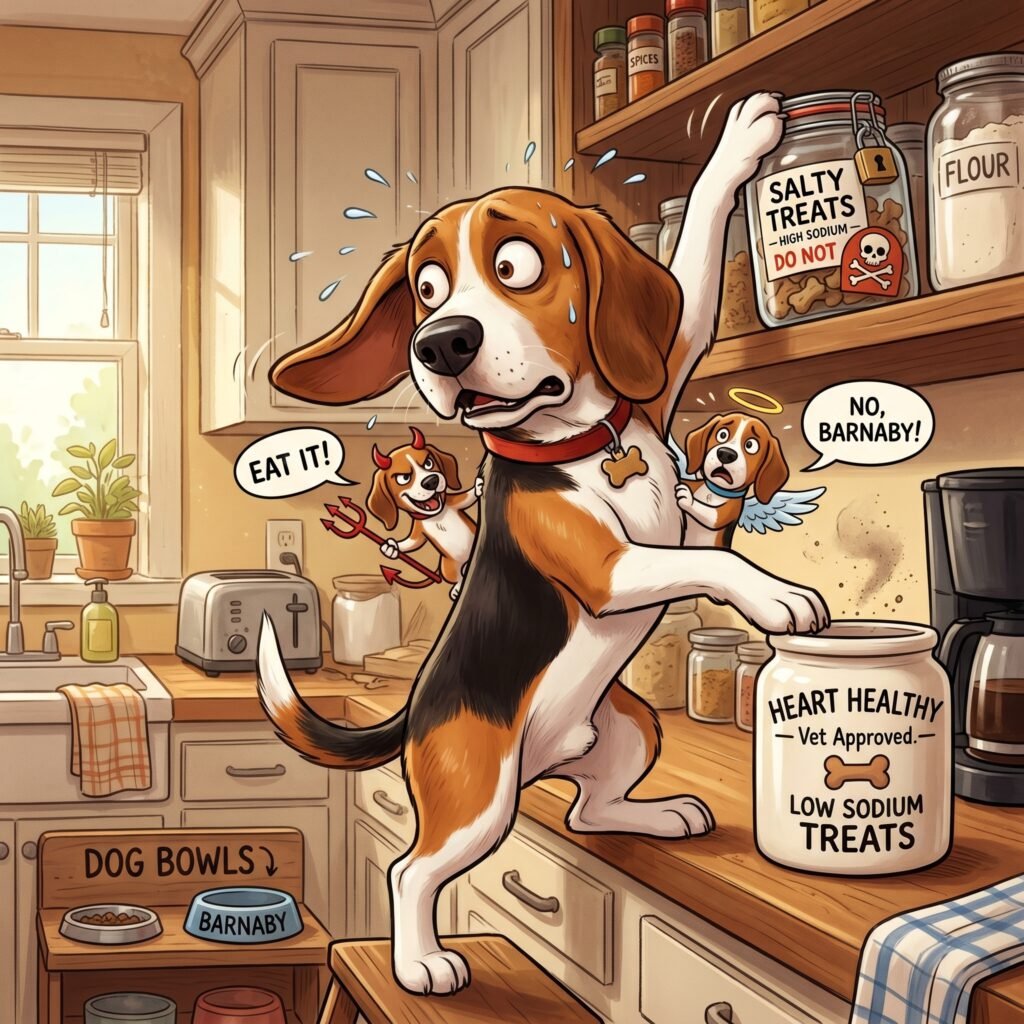
Now add three standard commercial dog biscuits. A medium Milk-Bone contains approximately 55–65 mg of sodium per biscuit. Three biscuits add 165–195 mg to the day’s total — pushing the dog 25–30% over the therapeutic sodium ceiling. Multiply this across seven days and the dog has consumed the equivalent of an entire extra day’s worth of sodium from treats alone.
This is not a hypothetical edge case. It is one of the most common reasons dogs on low sodium dog food and treats programs continue to show signs of fluid retention despite eating their prescription diet correctly.
The system approach means calculating the total daily sodium budget, allocating a specific portion to food (typically 80–90%) and a specific portion to treats (10–20%), then selecting both the food and the treats to fit within those allocations simultaneously.
Which Dogs Need Low Sodium Dog Food and Treats
The conditions that require low sodium dog food and treats management fall into four categories. Each has a slightly different sodium target and a slightly different clinical rationale for restriction.
Congestive Heart Failure (CHF)
When the heart cannot pump efficiently, the body compensates by activating the renin-angiotensin-aldosterone system — a hormonal cascade that causes the kidneys to retain sodium and water. The retained fluid increases blood volume, which raises pressure in the pulmonary vessels and causes fluid to accumulate in the lungs or abdomen. Reducing dietary sodium through both low sodium dog food and treats directly reduces the amount of sodium available for this harmful retention mechanism.
The degree of restriction depends on the American College of Veterinary Internal Medicine (ACVIM) disease stage. Dogs with early structural heart disease but no symptoms need less restriction than dogs who have already experienced active congestive heart failure.
Chronic Kidney Disease (CKD)
Healthy kidneys filter excess sodium from the bloodstream and excrete it in urine. As kidney function declines, this filtering capacity decreases. Sodium accumulates, raises blood pressure, and accelerates the kidney damage that causes further sodium retention. Low sodium dog food and treats reduce the sodium load that compromised kidneys must manage, slowing this destructive cycle.
Kidney disease management also involves phosphorus and protein control alongside sodium restriction — making the choice of low sodium dog food for kidney patients a multi-nutrient balancing act, not just a sodium question.
Hypertension (High Blood Pressure)
Excess dietary sodium raises blood pressure by increasing blood volume. In dogs with confirmed hypertension, managing low sodium dog food and treats is one component of blood pressure management alongside antihypertensive medications. The Cummings School of Veterinary Medicine at Tufts University guidelines recommend less than 100 mg of sodium per 100 kcal as the target for dogs needing sodium restriction — a benchmark applicable to both food and treat selection.
Liver Disease and Ascites
The liver regulates fluid balance and protein metabolism. Dogs with chronic liver disease or cirrhosis often develop ascites — fluid accumulation in the abdomen — that is directly worsened by high sodium intake. Low sodium dog food and treats reduce the fluid retention burden on a liver that can no longer manage it normally.
Understanding Sodium Numbers: The Unified Budget System
Before selecting specific products, establishing a unified sodium budget across food and treats gives you a quantitative framework for every decision.
Step 1: Establish the Daily Sodium Target
The Cummings School of Veterinary Medicine at Tufts University establishes the target for dogs needing sodium restriction as less than 100 mg per 100 kcal. For dogs with more advanced disease, your veterinarian will specify a tighter target — often 40–60 mg per 100 kcal for dogs with active CHF.
The National Research Council recommends 200 mg as the daily allowance for a 33-pound dog — equivalent to less than a quarter teaspoon of table salt per day. For dogs with conditions requiring restriction, this target may need to be lower.
Step 2: Calculate Daily Calories
Using the Resting Energy Requirement formula: 70 multiplied by body weight in kilograms to the power of 0.75, then multiply by an activity factor of 1.2–1.6 for most pet dogs with conditions requiring sodium restriction.
Step 3: Calculate Food Sodium Budget
Divide daily calories by 100, multiply by your sodium target (mg per 100 kcal), then multiply by 0.85 — reserving 15% of the sodium budget for treats.
Step 4: Calculate Treat Sodium Budget
The remaining 15% of total daily sodium is what all treats, pill pockets, flavored supplements, and extras combined must fit within.
Example for a 60-pound dog with early CHF:
- Calculated daily calories: approximately 1,150 kcal
- Sodium target: 80 mg per 100 kcal (mild restriction)
- Total daily sodium budget: (1,150 / 100) x 80 = 920 mg
- Food budget (85%): 782 mg
- Treat budget (15%): 138 mg maximum from all treat sources combined
138 mg sounds like a meaningful allowance. In reality, two standard commercial dog biscuits consume the entire treat budget. This is why natural low sodium treats — which deliver 4–20 mg per serving rather than 55–65 mg per biscuit — are so important in low sodium dog food and treats programs.
Best Low Sodium Dog Food: Prescription Options
These formulas require a veterinary prescription and deliver the tightest sodium control available. They represent the clinical standard for dogs with serious conditions.
Hill’s Prescription Diet h/d Cardiac Health
Hill’s h/d is one of the most widely prescribed low sodium dog food formulas for cardiovascular disease. Sodium content in the canned formula runs approximately 0.07% as fed — one of the lowest figures available in any complete commercial dog food. The dry formula achieves approximately 0.11%.
Beyond sodium, h/d includes therapeutic levels of taurine and L-carnitine (amino acid derivatives that support cardiac muscle function), controlled phosphorus for kidney protection, and omega-3 fatty acids from fish oil for cardiac inflammation management.
Available in dry and canned formats. Canned is often preferred for cardiac patients because higher moisture content supports hydration and tends to be more palatable for dogs whose appetite has declined with disease progression.
Best for: ACVIM Stage C and D dogs with active or recent congestive heart failure requiring maximum sodium restriction.
Hill’s Prescription Diet k/d Kidney Care
Hill’s k/d achieves simultaneous sodium, phosphorus, and protein management — the three most important dietary levers in chronic kidney disease. Sodium content runs approximately 0.2% as fed, appropriate for IRIS Stage 2–3 CKD. The formula is available in multiple protein options including chicken, beef, and ocean fish in both dry and wet formats.
The k/d wet varieties include stew formulations that significantly improve palatability for dogs with reduced appetite due to uremia — a common challenge in advanced kidney disease management.
Best for: Dogs with IRIS Stage 2–3 CKD requiring integrated sodium, phosphorus, and protein management.
Royal Canin Veterinary Diet Cardiac Early Cardiac EC22
Royal Canin’s cardiac formula is formulated for ACVIM Stage B2 and early Stage C dogs. It delivers moderate sodium restriction alongside a trio of cardiac-supportive amino acids — arginine, carnitine, and taurine — to address the multiple nutritional vulnerabilities of the cardiac patient. Palatability is a particular strength of this formula; it consistently earns higher acceptance ratings than Hill’s h/d in clinical palatability comparisons.
Best for: Early to moderate cardiac disease where palatability is as important as sodium control — particularly dogs who have rejected other prescription formulas.
Purina Pro Plan Veterinary Diets NF Kidney Function
Purina’s NF formula manages the combined protein, phosphorus, and sodium requirements of kidney disease patients with particular attention to ingredient digestibility. Purina’s manufacturing quality controls and feeding trial certification give this formula strong institutional credibility among veterinary internists.
Best for: Veterinarians and owners who prefer the Purina Pro Plan Veterinary Diet platform for therapeutic nutrition management.
Best Low Sodium Dog Food: Commercial Options Without a Prescription
For dogs with mild sodium sensitivity, healthy seniors needing preventive management, or dogs transitioning between disease stages, these commercial formulas offer meaningfully lower sodium than standard kibble without requiring a prescription or veterinary authorization.
The Farmer’s Dog — Chicken Recipe
The Farmer’s Dog Chicken recipe delivers 0.89 grams of sodium per 1,000 kcal — approximately 0.12% as fed. This is one of the lowest sodium figures available in any complete and balanced commercial dog food without a prescription.
Fresh food formulas achieve naturally low sodium because they do not rely on salt as a palatability enhancer or as part of a preservation system. The food is refrigerated and portioned in individual serving pouches, making portion control precise and consistent — an important practical advantage for sodium management.
The trade-off is cost and the requirement for refrigeration. For owners committed to a fresh food approach to low sodium dog food and treats management, The Farmer’s Dog represents the strongest commercially available option in the non-prescription category.
The Honest Kitchen — Whole Grain Turkey
The Honest Kitchen’s dehydrated whole-food formulas use human-grade ingredients that do not require the salt loading of extruded dry kibble. When rehydrated, they provide higher moisture content alongside naturally moderate sodium levels. The turkey formula in particular offers a clean ingredient panel with no artificial preservatives, colors, or flavors.
Best for: Dogs with mild restriction needs who benefit from a whole-food, minimally processed format.
Fromm Large Breed Adult Gold
This formula achieves moderate sodium control alongside a blend of lean proteins (turkey and fish) appropriate for large breed adults who need concurrent weight management alongside mild sodium reduction. Sodium content runs in the moderate restriction range, suitable for healthy seniors or early-stage disease prevention.
Best for: Large breed senior dogs where preventive sodium management and weight control are concurrent priorities.
Best Low Sodium Dog Treats: Commercial Options
Mattie’s Treats — Low Sodium and Low Phosphorus
Mattie’s Treats are specifically formulated for dogs with kidney disease, with low sodium and low phosphorus as primary design criteria. They represent one of the few commercial treat products where sodium management for medically compromised dogs was the founding formulation purpose — not an afterthought or a marketing label applied to a standard treat recipe.
Available online and through some specialty pet retailers. Appropriate for both kidney and cardiac patients when phosphorus control is also a requirement.
Fruitables Skinny Minis
Fruitables Skinny Minis are small, soft training treats with a relatively low sodium content compared to standard commercial dog treats. At approximately 35 mg of sodium per 100 grams and 5 calories per treat, they fall within the acceptable range for mild sodium restriction when used in controlled quantities. Their small size makes calorie and sodium counting straightforward.
Available at most pet supply retailers without prescription.
Hill’s Prescription Diet Kidney Care Treats
Hill’s produces a prescription treat companion to the k/d food line, specifically formulated to maintain the sodium and phosphorus ceiling of a kidney care diet. These are the gold-standard commercial low sodium dog treats for kidney disease patients because they are formulated by the same team that designed the therapeutic diet — ensuring the treat does not undo what the food achieves.
Available through veterinarians and veterinary online pharmacies.
Wellness Soft WellBites — Natural Treats
Wellness Soft WellBites offer a natural, whole-food ingredient treat with lower sodium than most soft training treats. The chicken and venison variety contains no artificial additives and uses clean protein sources. Sodium content is moderate — appropriate for healthy dogs and mild restriction cases but not for dogs requiring therapeutic sodium targets below 60 mg per 100 kcal.
The Safest Natural Low Sodium Treats: Vegetables and Fruits
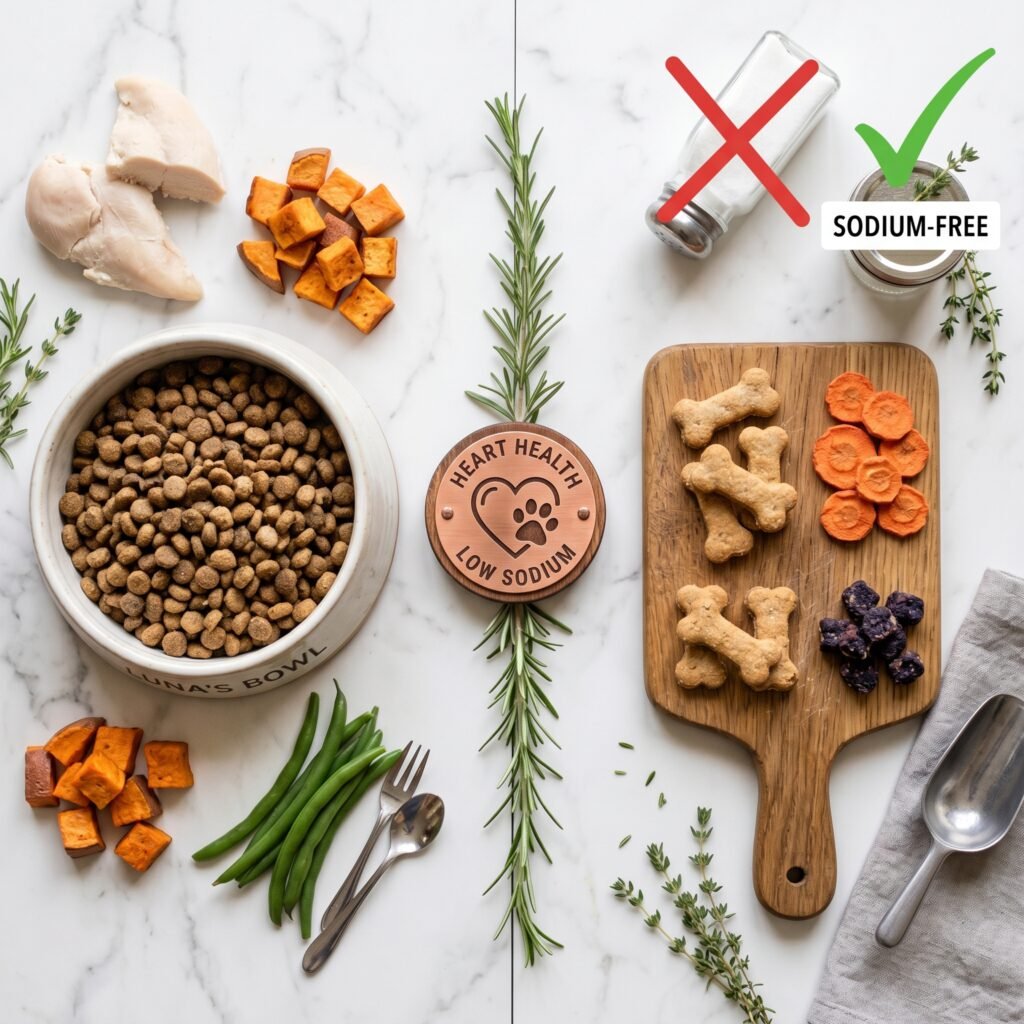
Fresh vegetables and fruits are the most reliable low sodium dog treats available — not because they were formulated to be low in sodium, but because they naturally contain almost none.
Vegetables
Baby carrots are the single most practical natural low sodium treat for dogs on restriction. Each baby carrot contains approximately 10 mg of sodium. They are crunchy, satisfying for dogs who like texture, widely available, inexpensive, and genuinely low in calories (approximately 4 kcal each). A dog can receive ten baby carrots as treats throughout the day for a total sodium contribution of 100 mg — manageable even in moderate restriction programs.
Green beans (fresh or frozen, no salt added) contribute approximately 2–3 mg of sodium per large bean. Frozen green beans make excellent treats for dogs who enjoy the cold texture, and the freezing process does not add sodium. Avoid canned green beans unless the label specifically states “no salt added” — standard canned green beans contain approximately 300–400 mg of sodium per half cup.
Cucumber slices contain almost zero sodium and have high water content, making them a particularly hydrating treat option for dogs on sodium restriction who also need increased fluid intake.
Pumpkin (plain, canned, no spices or pie filling) provides approximately 2–5 mg of sodium per tablespoon alongside meaningful soluble fiber. It is particularly useful as a food topper or treat component for dogs whose digestion is compromised by their primary condition.
Broccoli florets (small pieces, served raw or lightly steamed with no salt) contribute minimal sodium alongside vitamin C and antioxidant compounds. Keep portions small — large amounts of cruciferous vegetables can cause gas, which can worsen GDV risk in deep-chested breeds.
Celery is an important exception to the “vegetables are always low sodium” rule. Celery is relatively high in sodium for a vegetable and tends to surprise most pet owners when they check the label. Avoid celery for dogs on strict sodium restriction.
Fruits
Blueberries contain approximately 1 mg of sodium per berry and provide antioxidant compounds relevant to the oxidative stress that accompanies both cardiac and kidney disease. They are small enough to use as training treats without calorie concerns.
Apple slices (seeds and core removed) contain minimal sodium and are well-accepted by most dogs. Remove seeds before serving — they contain trace amounts of cyanogenic compounds.
Watermelon (seedless, rind removed) has extremely low sodium and very high water content — useful for dogs who need hydration support alongside sodium restriction.
Avoid grapes and raisins entirely — they are toxic to dogs regardless of sodium content.
Avoid dried fruits — the drying process concentrates sodium and sugar simultaneously, making even naturally low-sodium fruits dangerous in dried form.
Meats as Low Sodium Treats: What Works and What Doesn’t
Plain cooked meat is an excellent low sodium treat option — with one non-negotiable condition: it must be prepared without salt, seasoning, or commercial broth.
Plain cooked chicken (white meat, no skin, no seasoning, no broth) contains approximately 33 mg of sodium per 100 kcal. This makes it one of the lowest-sodium meat-based treats available. A small cube of plain boiled chicken breast makes an ideal high-value training treat for dogs on sodium restriction.
Plain cooked turkey (no skin, no seasoning, no gravy) performs similarly to chicken — approximately 35–45 mg of sodium per 100 kcal depending on the cut.
Canned fish is a more complicated category. Most canned tuna and canned salmon are very high in sodium because salt is added during the canning process. However, no-salt-added options exist. Wild Planet’s No Salt Added Skipjack Tuna delivers approximately 43 mg of sodium per 100 kcal — appropriate for mild restriction use in small amounts. Wild Planet’s No Salt Added Organic Roasted Chicken Breast runs approximately 33 mg per 100 kcal.
Avoid all processed and deli meats entirely: ham, deli turkey, salami, hot dogs, sausage, bacon, and any cured meat product. These are among the highest-sodium foods that exist and are completely incompatible with low sodium dog food and treats management.
Avoid commercial beef or chicken jerky treats. The drying process used to produce jerky concentrates sodium dramatically. Even treats marketed as “natural” or “single ingredient” jerky can deliver 150–300 mg of sodium per serving.
Low Sodium Pill Pockets: How to Give Medications Without Salt
Pill administration is one of the most commonly overlooked sodium sources in low sodium dog food and treats management. Pill pockets — whether commercial products or food-based wraps — contribute real sodium to the daily total. For a dog taking three or four medications twice daily, this can represent a meaningful fraction of their sodium budget.
What to Avoid
Commercial pill pockets — including the widely available Greenies Pill Pockets — are convenient but contain meaningful sodium. A single Greenies Pill Pocket (chicken flavor) contains approximately 70–80 mg of sodium, which consumes a large portion of the treat budget for dogs on strict restriction. When a dog requires multiple pills twice daily, commercial pill pockets can easily deliver 400–500 mg of sodium per day from medication administration alone.
Safe Low Sodium Pill Pocket Options
Plain cooked chicken is the simplest and most effective low sodium pill pocket. A small piece of chicken wrapped around a pill contains approximately 5–10 mg of sodium depending on the size — a fraction of what commercial pill pockets deliver. Most dogs accept medication happily in chicken.
Peanut butter without xylitol and without added salt can work for some medications. Check the label carefully — many mainstream peanut butter brands have significant sodium content. Look specifically for unsalted natural peanut butter where salt is not listed in the ingredient panel.
Plain cream cheese (full fat, no flavoring) in a very small amount provides a soft, sticky texture ideal for pill concealment. Check sodium per tablespoon — full-fat cream cheese varies between 65–100 mg per tablespoon. Use a very small amount (less than a quarter teaspoon) to keep sodium contribution minimal.
Plain canned pumpkin (no spices, no pie filling) works as a pill concealment medium for some dogs. Its soft texture and mild flavor are accepting for many medications, and its sodium content is negligible.
Small banana pieces can conceal capsule medications for dogs who enjoy fruit. Banana has minimal sodium and the soft texture molds easily around a capsule.
Unsalted rice cake pieces torn small enough to wrap around a tablet provide a crunchy, low-sodium option that many dogs accept for larger pill formats.
Plain yogurt (caramel or vanilla flavors, no artificial sweeteners) can serve as a liquid pill concealment medium — check that sodium is less than 100 mg per 100 kcal before using. Yoplait original flavors run approximately 56 mg per 100 kcal, which is within acceptable range for small amounts.
Homemade Low Sodium Dog Treats: Recipes and Rules
Making low sodium dog treats at home gives complete control over every ingredient — including salt content. These are the most reliable low sodium dog treats available because you control the formula entirely.
The Non-Negotiable Rule First
Never add salt, soy sauce, garlic, onion, xylitol, raisins, grapes, macadamia nuts, or chocolate to any homemade dog treat. This list represents ingredients that are either very high in sodium or genuinely toxic to dogs regardless of sodium content.
Simple Homemade Low Sodium Treat Recipes
Frozen Chicken Bites Ingredients: 1 cup plain boiled chicken breast (no salt), shredded fine. Place on a parchment-lined baking sheet as small pieces and freeze for two hours. Store in a sealed container in the freezer. The cold texture provides enrichment alongside the treat. Sodium per bite: approximately 3–5 mg.
Pumpkin and Oat Training Biscuits Ingredients: 1 cup rolled oats (no salt), half a cup of plain canned pumpkin, one egg. Mix thoroughly, roll thin, cut into small pieces, and bake at 175°C (350°F) for 25–30 minutes until firm. Cool completely before storing. Sodium per biscuit (small): approximately 8–12 mg. These can be made in bulk and frozen in portions for convenience.
Blueberry Yogurt Bites Ingredients: half a cup of unsalted plain yogurt (check label for sodium below 100 mg per 100 kcal), a quarter cup of fresh blueberries mashed. Spoon into ice cube tray compartments or a silicone mold, freeze for three hours. Sodium per bite: approximately 5–10 mg depending on yogurt brand.
Carrot and Apple Chews Ingredients: one large carrot peeled and cut into thick rounds, one apple (seeds removed) sliced thin. Dehydrate at 70°C (160°F) in an oven or food dehydrator for 6–8 hours until leathery but not brittle. Sodium per piece: under 5 mg. These have a satisfying chew texture appropriate for dogs who enjoy work-to-eat enrichment.
High-Sodium Treats to Eliminate Immediately
The following treats must be completely removed from a low sodium dog food and treats management program. They are incompatible with any level of therapeutic sodium restriction:
Processed meat treats — jerky treats, meat sticks, rawhide flavored with smoke or meat extract, deli meat pieces. Sodium content per serving ranges from 100–500 mg or more.
Commercial dog biscuits — standard dog biscuits from supermarket brands (Milk-Bone and similar). Each medium biscuit contains 55–65 mg of sodium. An apparently modest three-biscuit daily treat habit delivers 165–195 mg — using the entire treat allowance at the moderate restriction level.
Dental chews with palatability enhancers — many dental chews add sodium-based flavoring agents to improve acceptance. Check the label before assuming dental chews are safe in a low sodium program.
Cheese in quantity — a small amount of low-sodium cheese occasionally is manageable, but cheese is moderately high in sodium. One ounce of cheddar contains approximately 180 mg of sodium — the entire treat budget for a moderately restricted dog.
Human table scraps of any processed kind — chips, crackers, pretzels, salted nuts, bread, pizza crust, restaurant food. Even a small amount of heavily salted human snack food can deliver the equivalent of several days’ worth of treat sodium allocation in a single episode.
Flavored training treat pouches without checking sodium — soft training treats vary enormously in sodium content. Some are genuinely low (Fruitables Skinny Minis). Others contain 100–200 mg per 100 grams. Always check the guaranteed analysis before purchasing any commercial treat for a sodium-restricted dog.
How to Read Treat Labels for Sodium Content
Sodium information on treat labels requires the same calculation approach used for dog food.
If the label shows sodium as a percentage, convert it: multiply the sodium percentage by 10,000 to get mg per kilogram of food, then divide by the treat’s caloric density (kcal per kg) and multiply by 100 to get mg per 100 kcal.
If the label shows sodium in mg per serving, divide by the number of calories per serving and multiply by 100.
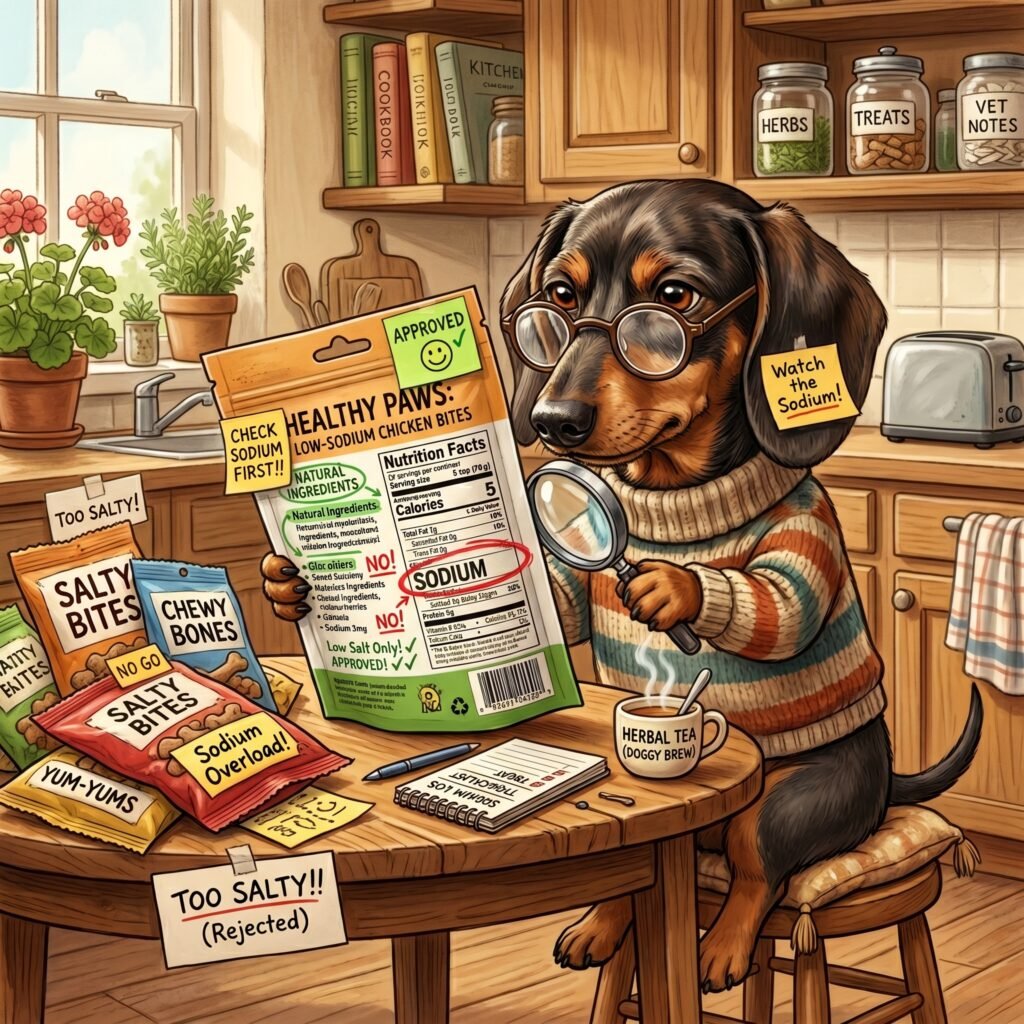
The Cummings School of Veterinary Medicine at Tufts University recommends targeting less than 80 mg of sodium per 100 kcal for treats in dogs on sodium restriction — use this as your screening threshold when evaluating any commercial treat option.
Any treat that does not provide enough information to make this calculation should be avoided in a therapeutic low sodium dog food and treats program. If you cannot verify the sodium content, you cannot budget for it.
Sodium in Dental Chews and Flavored Supplements
Dental chews are one of the most commonly overlooked sodium sources in low sodium dog food and treats programs. Many dogs on cardiac or renal diets receive daily dental chews as part of an oral health routine — and many owners do not realize these chews can contain meaningful sodium from palatability agents added to make them acceptable to dogs.
Greenies Original dental chews contain approximately 120–180 mg of sodium per chew depending on the size. For a dog on a 500 mg daily sodium budget, a single Greenies Original chew consumes 24–36% of the entire budget.
Enzymatic toothbrushing is a zero-sodium alternative for maintaining oral health in sodium-restricted dogs. Veterinary enzymatic toothpaste formulated for dogs adds negligible sodium to the daily total and is the preferred oral health approach for dogs on strict low sodium dog food and treats programs.
If dental disease is severe and dental chews are clinically necessary, discuss options with your veterinarian — some dental chew products have lower sodium profiles than Greenies, and the clinical benefit of dental health management may outweigh the sodium contribution in specific cases.
Flavored joint supplements and omega-3 chews should also be checked for sodium content. Duck- or chicken-flavored joint supplement chews sometimes use palatability enhancers that add 20–50 mg of sodium per chew. Over the course of a day, regular supplementation can add meaningful sodium to a program that the food calculations do not account for.
The 10% Treat Rule Applied to Sodium Management
The standard veterinary nutrition recommendation is that treats should constitute no more than 10% of a dog’s total daily calorie intake. In low sodium dog food and treats management, this rule requires an additional sodium-specific interpretation.
Treats at 10% of calorie intake should also represent approximately 10–15% of total daily sodium intake. This is the sodium allocation principle that protects the therapeutic sodium ceiling established by the prescription food.
In practice, this means the treat choices that work within a low sodium program are almost exclusively natural foods — vegetables, fruits, small amounts of plain cooked meat — rather than commercial treat products, because only natural foods reliably deliver less than 20 mg of sodium per treat serving.
When training a sodium-restricted dog who requires high-value treats for motivation, use small pieces of plain cooked chicken as your primary reward. At approximately 33 mg per 100 kcal, plain chicken offers the high palatability of a genuine protein reward at a sodium cost that natural and commercial treats cannot match at equivalent palatability.
Frequently Asked Questions About Low Sodium Dog Food and Treats
What sodium level makes a treat safe for my dog on a low sodium diet?
The Cummings School of Veterinary Medicine at Tufts University guideline recommends less than 80 mg of sodium per 100 kcal as the threshold for treats in dogs requiring sodium restriction. For dogs on more aggressive restriction — ACVIM Stage C cardiac patients, for example — your veterinarian may specify an even lower per-treat limit. Natural options like baby carrots (approximately 2–4 mg per carrot) and plain cooked chicken pieces (approximately 5–10 mg per small piece) are the safest across all restriction levels.
Can I give my dog dental chews while they are on a low sodium diet?
Standard commercial dental chews including Greenies Original are too high in sodium for dogs on therapeutic restriction. Enzymatic toothbrushing with veterinary-formulated dental paste is the recommended alternative that provides oral health benefits without sodium contribution. If dental disease is severe and chewing is a clinical necessity, discuss lower-sodium dental options specifically with your veterinarian.
My dog needs medication twice daily and refuses pills in food — what can I use as a low sodium pill pocket?
The most effective low sodium pill pockets are small pieces of plain cooked chicken (3–5 mg sodium per piece), a tiny amount of unsalted peanut butter (check the label for no added salt), small banana pieces for capsules, or plain canned pumpkin. Avoid commercial pill pockets for dogs on strict sodium restriction — a single Greenies Pill Pocket contains approximately 70–80 mg of sodium.
Are there commercial dog treats specifically designed for sodium restriction?
Yes. Mattie’s Treats are formulated specifically for dogs with kidney disease with low sodium and low phosphorus as primary design criteria. Hill’s Prescription Diet also produces treat products companion to their k/d kidney care line. For general mild restriction, Fruitables Skinny Minis offer a lower-sodium commercial treat option widely available without prescription.
How do I know if my dog’s current treats are safe for a low sodium diet?
Check the guaranteed analysis on the treat package for sodium as a percentage. Divide that percentage by the caloric density (kcal per kg, usually found in the feeding guide) and multiply by 1,000,000 to get mg per 100 kcal. If the result is above 80 mg per 100 kcal, the treat is not appropriate for therapeutic sodium restriction. If the information to make this calculation is not available on the package or manufacturer website, the treat should be avoided.
Can I feed my dog frozen vegetables as low sodium treats?
Yes — with one important condition. Frozen vegetables with no salt added are excellent low sodium treats. Always check the ingredient list on frozen vegetable packages to confirm no salt was added during processing. “Plain” frozen green beans, peas, and carrots are typically salt-free. Mixed vegetable blends sometimes include added salt. Read the label every time, not just once, as manufacturers occasionally change formulations.
Does the sodium in my dog’s prescription food already account for treats?
No. Prescription low sodium dog food formulas are calculated to deliver a target sodium level from the food alone. They do not factor in additional sodium from treats, pill pockets, dental chews, or supplements. The treat budget must be calculated separately and managed in addition to the food prescription — not as part of it.
Final Verdict: Managing Low Sodium Dog Food and Treats as One System {#verdict}
The key insight this guide is built around is simple: managing low sodium dog food and treats as two separate decisions is how most sodium restriction programs fail. Managing them as one integrated daily budget is how they succeed.
Start with your veterinarian’s specific sodium target per 100 kcal for your dog’s condition and disease stage. Use that number to calculate the total daily sodium budget. Allocate 85% to the food — choosing the appropriate prescription or commercial low sodium formula. Allocate the remaining 15% to treats, pill pockets, dental care, and supplements combined.
Fill that treat allocation with natural options first: baby carrots at 3–5 mg per carrot, blueberries at approximately 1 mg each, plain cooked chicken at approximately 33 mg per 100 kcal, apple slices at negligible sodium per slice. These options keep the treat budget manageable while maintaining the reward experience and training utility that treats provide.
Reserve commercial low sodium dog treats — Mattie’s Treats, Fruitables Skinny Minis, Hill’s k/d Treats — for situations where commercial convenience, palatability, or specific nutritional formulation (such as combined low sodium and low phosphorus for kidney patients) is required.
Eliminate immediately: commercial biscuits, jerky treats, dental chews without sodium verification, processed meat scraps, and any treat whose sodium content you cannot verify in mg per 100 kcal.
Your dog’s prescription low sodium dog food and treats program works only as well as every component of it. Food and treats are one system. Manage them that way.
This guide is for educational and informational purposes only. It does not constitute veterinary medical advice. Dogs with diagnosed heart disease, kidney disease, liver disease, hypertension, or any other condition requiring sodium restriction must have their dietary management supervised by a licensed veterinarian.