Dog Food for Newfoundland Dogs: The Complete Giant Breed Feeding Guide (2026)
Updated: June 2026 · Giant Breed Specialist Content · Vet-Aligned · Covers All Life Stages

Newfoundland dogs are not large dogs. They are giant dogs — and that distinction changes everything about how you feed them. Selecting the best dog food for Newfoundland dogs is not about finding the most popular brand on the shelf. It is about protecting their joints, managing their weight, supporting heart health, and helping them move comfortably throughout their long, slow-maturing lives.
The wrong food for Newfoundland dogs can quietly contribute to joint breakdown, obesity, digestive issues, and even a shortened lifespan. The right food — chosen with an understanding of what makes this breed biologically distinct — gives your Newfoundland the nutritional foundation for the healthiest version of the 9–10 years they typically live.
This guide covers exactly what the best dog food for Newfoundlands must deliver, the five health vulnerabilities that drive every feeding decision, the top formulas for every life stage in 2026, and a complete feeding and portioning system that works for a breed that can weigh anywhere from 100 to over 150 pounds.
Navigate This Guide
- Why Newfoundlands Are Not Just “Big Dogs”
- Five Health Vulnerabilities That Define the Best Dog Food for Newfoundland Dogs
- What Newfoundlands Need Nutritionally: The Full Breakdown
- The Newfoundland Food Label Scorecard
- Best Dog Food for Newfoundland Dogs: 2026 Top Picks
- Best Dog Food for Newfoundland Puppies
- Best Dog Food for Adult Newfoundlands
- Best Dog Food for Senior Newfoundlands
- Grain-Free Dog Food and Newfoundlands: The Heart Disease Risk
- Feeding Schedule and Portion Guide
- Ingredients Newfoundlands Should Never Eat
- Frequently Asked Questions
- Final Verdict
Why Newfoundlands Are Not Just “Big Dogs”
Newfoundlands fall into the giant breed category, which is more than a label — it is a nutritional reality. Giant breeds grow differently, age differently, and experience health issues that are directly influenced by what is in their bowl.
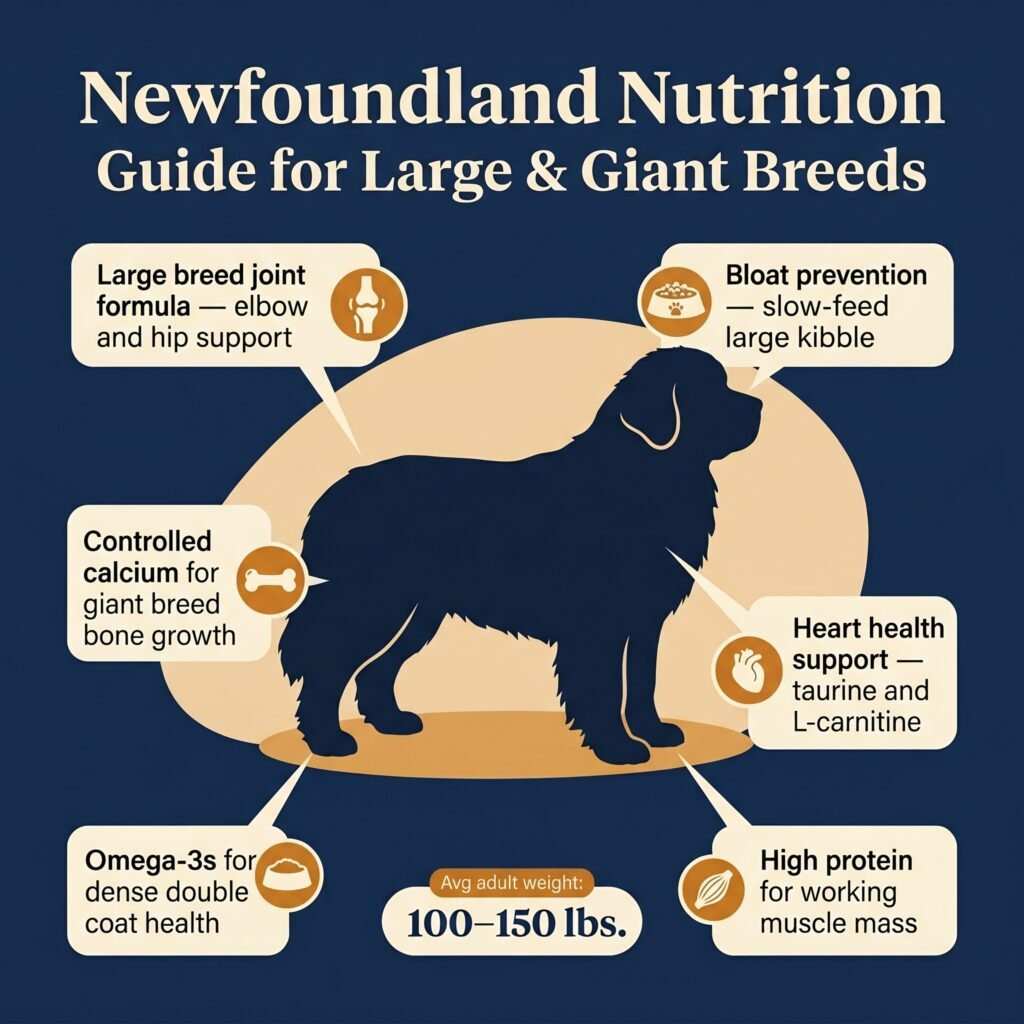
Newfoundlands can weigh anywhere from 100 to over 150 pounds. Males typically reach 130–150 lbs; females 100–120 lbs. Unlike smaller dogs that mature quickly, Newfoundlands grow slowly and do not reach full adult size until approximately two years of age. This extended growth window creates a prolonged period during which nutrition-related developmental errors can accumulate and manifest as lifelong joint or skeletal problems.
The right dog food for Newfoundland dogs does not simply scale up the calories of a standard large-breed formula. It must specifically address the giant breed’s slower growth rate, lower caloric density requirements during puppyhood, elevated joint load across their entire lifespan, predisposition to specific cardiac conditions, and a deep chest that creates significant bloat risk.
Poor nutrition in Newfoundlands commonly leads to excessive weight gain, joint damage from rapid growth, digestive problems, and reduced mobility later in life. On the other hand, balanced feeding supports controlled growth, strong bones, healthy muscles, a dense waterproof coat, and steady energy levels without unnecessary strain on the body.
Five Health Vulnerabilities That Define the Best Dog Food for Newfoundland Dogs
These are the conditions that separate the best dog food for Newfoundlands from generic giant breed formulas. Every recommendation in this guide is anchored to one or more of these five vulnerabilities.
Vulnerability 1: Hip and Elbow Dysplasia
Hip and elbow dysplasia are among the most prevalent conditions affecting Newfoundland dogs. These are developmental joint conditions where the hip or elbow socket does not form correctly, leading to chronic pain, progressive arthritis, and reduced mobility. The combination of Newfoundland genetics, their massive body weight, and the mechanical stress of carrying that weight across a long lifespan makes joint health the single most important nutritional priority in any best dog food for Newfoundland formula.
The best dog food for Newfoundland dogs directly addresses this through glucosamine and chondroitin for cartilage support, marine-source omega-3 fatty acids (EPA and DHA) to reduce joint inflammation, and controlled calcium-to-phosphorus ratios during puppyhood to prevent rapid skeletal growth that destabilizes developing joints.
Maintaining ideal body weight to reduce joint stress is one of the most powerful interventions available. Every additional pound of body weight puts disproportionate stress on joints already operating at giant-breed load levels.
Vulnerability 2: Dilated Cardiomyopathy (DCM) and Subaortic Stenosis (SAS)
Newfoundlands are predisposed to two distinct cardiac conditions. Dilated cardiomyopathy (DCM) is a serious condition in which the heart muscle weakens and the heart enlarges, reducing its ability to pump blood effectively. DCM is primarily believed to be a genetic disease most commonly found in giant dog breeds. Subaortic stenosis (SAS) is a congenital narrowing below the aortic valve that restricts blood flow from the heart.
These cardiac vulnerabilities make the dog food brand for Newfoundland a nutrition choice with genuine cardiac implications. Diets lacking key nutrients or relying heavily on ultra-processed ingredients may contribute to long-term cardiac stress. Taurine and L-carnitine are amino acid derivatives that support cardiac muscle function and have been studied in relation to DCM management.
Critically for Newfoundland owners: grain-free diets high in legumes have been linked to diet-associated DCM by the FDA since 2018, and Newfoundlands are already a DCM-predisposed breed. This makes grain-free, legume-heavy formulas a specific risk category for this breed. The best dog food brand for Newfoundland dogs should be grain-inclusive and formulated with taurine and carnitine support.
Vulnerability 3: Bloat (GDV — Gastric Dilatation-Volvulus)
Increased risk of bloat and GDV is seen in older dogs with a deep chest, like the Newfoundland. Bloat occurs when the stomach fills with gas and twists on itself, blocking blood flow. Without emergency surgery, GDV is fatal. Newfoundlands have one of the highest GDV mortality risks of any breed due to their deep, barrel-shaped chest.
Highly processed foods that swell in the stomach or ferment during digestion can increase GDV discomfort and risk. This is why food quality, ingredient digestibility, and feeding schedule all function as GDV risk management tools in the best dog food for Newfoundland dogs — not just nutrition delivery systems.
To prevent GDV, a gastropexy procedure can secure the stomach to prevent it from twisting. This is often done at the same time as the dog’s spay or neuter surgery — discuss this with your veterinarian proactively rather than waiting for symptoms.
Vulnerability 4: Osteosarcoma (Bone Cancer)
Osteosarcoma is an aggressive bone cancer that Newfoundland dogs are predisposed to. It is the most common type of bone tumor found in dogs, especially in larger breeds. While diet cannot prevent osteosarcoma, maintaining a healthy body weight, ensuring adequate antioxidant intake, and keeping inflammatory pathways managed through omega-3 fatty acids are supportive measures that create the best internal environment for overall cellular health.
Vulnerability 5: Obesity and Weight Management
Because Newfoundlands are large and often laid-back, weight gain can happen quickly and quietly. Obesity accelerates joint damage, stresses the heart, and shortens lifespan. Portion control and nutrient-dense food matter far more than simply feeding less kibble. The best dog food for Newfoundlands is calorie-controlled enough to support lean body condition without requiring starvation-level portions that leave the dog unsatisfied and nutritionally compromised.
What Newfoundlands Need Nutritionally: The Full Breakdown
Protein
Protein is essential for maintaining the Newfoundland’s heavy muscle mass and overall body structure. Adult Newfoundlands need adequate, high-quality protein to support muscle maintenance, immune function, and tissue repair. For puppies, protein must be sufficient but not excessive, as overly rich diets can accelerate growth to a rate that exceeds skeletal development capacity.
Newfoundland Dog Health Center nutrition guidelines recommend dry matter content of about 30% protein for adult dogs, with named animal protein as the primary source.
Target protein ranges:
- Puppies (giant breed formula): 22–26% dry matter basis
- Active adults: 26–30% dry matter basis
- Senior dogs: 26–28% (maintained high to prevent muscle loss)
Fat
Fat supports the Newfoundland’s dense, double-layered, water-resistant coat — one of the breed’s most distinctive physical features. Omega-6 fatty acids (linoleic acid from chicken fat or sunflower oil) maintain the skin barrier and coat texture. Omega-3 fatty acids from marine sources support joint inflammation reduction and cardiac function.
Target fat range: 10–16% for adults. Lower end appropriate for dogs prone to weight gain; upper end for active dogs or those with poor coat condition.
Calcium and Phosphorus: The Giant Breed Non-Negotiable
This is the most critical nutritional control point in dog food for Newfoundland puppies. Newfoundland Dog Health Center guidelines specify dry matter content of about 1.5% calcium and 0.8–1% phosphorus for appropriate giant breed development. Excess calcium during the rapid growth phase causes skeletal abnormalities, accelerated joint development, and increased dysplasia risk. Standard puppy food has calcium levels designed for small breeds — always too high for giant breeds.
This is why the best dog food for Newfoundland puppies must be specifically labeled for large or giant breed puppy growth.
Fiber
Adequate fiber (3.5–5%) supports digestive health and helps the Newfoundland’s gut motility function normally. Prebiotic fiber sources (chicory root, beet pulp, psyllium) are preferable to cellulose-based fillers.
Key Micronutrients for Newfoundlands
| Nutrient | Role | Target/Source |
|---|---|---|
| Glucosamine | Joint cartilage support | Min 400–500 mg/kg in food |
| Chondroitin | Joint lubrication | Min 100–200 mg/kg in food |
| Omega-3 (EPA/DHA) | Joint inflammation, heart, coat | Marine: salmon oil, fish oil |
| Taurine | Cardiac muscle function | Meat-based diets; supplement if needed |
| L-Carnitine | Heart muscle metabolism, fat metabolism | Found in red meat; supplement for cardiac dogs |
| Omega-6 (Linoleic acid) | Coat and skin barrier | Chicken fat, sunflower oil |
| Vitamin E | Antioxidant, immune support | Oils, added supplement |
| Calcium/Phosphorus | Bone development (controlled ratio) | Giant breed formulas only |
| Zinc (chelated) | Skin, coat, immune function | Zinc proteinate |
| Antioxidants (Vit C, E, selenium) | Cellular protection, immune function | Whole-food additions |
The Newfoundland Food Label Scorecard
Use this checklist to evaluate any dog food for Newfoundland dogs before buying:
Look for:
- Named animal protein (chicken, beef, turkey, salmon, lamb) as the first ingredient
- AAFCO statement specifically covering large or giant breed growth (for puppies)
- Glucosamine and chondroitin in the guaranteed analysis
- Marine omega-3 source (salmon oil, fish oil, menhaden fish)
- Taurine listed as an ingredient (cardiac protection)
- Chelated minerals (zinc proteinate, manganese proteinate)
- Prebiotic fiber source (chicory root, beet pulp)
- Crude fat between 10–16% for adults
- Total crude fiber between 3.5–5%
- Calorie density appropriate for a giant breed (350–420 kcal/cup for adults)
Avoid:
- Grain-free formulas with peas, lentils, or chickpeas as primary ingredients (DCM risk)
- High-fat formulas over 18% for sedentary dogs (weight and GDV risk)
- Formulas without AAFCO large breed growth coverage (for puppies)
- Corn syrup or molasses (empty calories, gut fermentation risk)
- Artificial preservatives (BHA, BHT, ethoxyquin)
- Very high calorie density over 430 kcal/cup for sedentary adults
Best Dog Food for Newfoundland Dogs: 2026 Top Picks
Every formula below meets the Newfoundland scorecard: named protein first, joint support, omega-3 from marine sources, cardiac-protective nutrients, appropriate caloric density, and AAFCO compliance for the correct life stage.
Best Overall Dog Food for Newfoundland Dogs: Purina Pro Plan Large Breed (Chicken and Rice)
Purina Pro Plan Large Breed is the most consistently veterinarian-recommended best dog food for Newfoundland adults — and for good reason. It hits every major nutritional requirement for this breed with clinical backing that few competitors can match.
Why it leads as the best dog food for Newfoundlands:
- Deboned chicken as the first ingredient — complete, named animal protein
- Rice as the primary carbohydrate — highly digestible, gentle on sensitive digestive tracts
- Glucosamine (400 mg/kg) and EPA/DHA for joint support
- Live probiotics (Bacillus coagulans) for digestive health
- Grain-inclusive — critical for a DCM-predisposed breed; avoids the legume-heavy grain-free risk
- Backed by AAFCO feeding trials — the highest clinical standard
- Taurine present through high-quality meat protein base
- Approximately 388 kcal/cup — appropriate caloric density for most adult Newfoundlands
Guaranteed Analysis: Protein min 26% | Fat min 16% | Fiber max 3%
Best for: Most healthy adult Newfoundlands as the foundation best dog food brand for Newfoundland feeding at any activity level.
Best Dog Food Brand for Newfoundland Heart Health: Hill’s Science Diet Large Breed (Chicken Meal, Barley and Brown Rice)
For Newfoundland owners whose primary concern is cardiac health — given the breed’s DCM and SAS predispositions — Hill’s Science Diet Large Breed is the most clinically supported best dog food for Newfoundlands in the mainstream market.
- Clinically proven antioxidant formula for immune support
- Controlled sodium — important for cardiac health; excess sodium strains the cardiovascular system
- Grain-inclusive formula — no legume-based carbohydrate risk
- Omega-3 from fish oil for heart and joint inflammation management
- Hill’s L-carnitine levels support heart muscle metabolism
- Approximately 363 kcal/cup — conservative caloric density for weight management
Best for: Newfoundlands with known cardiac history, dogs from lines with documented DCM, and owners who prioritize cardiac nutrition as their primary dog food for Newfoundland selection criterion.
Best Premium Dog Food for Newfoundlands: Orijen Large Breed
For owners seeking the highest ingredient quality as their best dog food for Newfoundland dogs, Orijen Large Breed delivers the most protein-dense, meat-forward formula available in a widely distributed dry kibble.
- 85% animal ingredients including fresh chicken, turkey, fish, and eggs
- 38% protein on a dry matter basis
- WholePrey ratios delivering natural taurine from fresh organ meats
- No corn, wheat, or soy
- Omega-3 from fresh-caught mackerel and herring — marine source EPA/DHA
- Glucosamine and chondroitin from natural cartilage in meat inclusions
- Approximately 449 kcal/cup — higher calorie density requires careful portion management for sedentary Newfoundlands
Best for: Active adult Newfoundlands with significant daily exercise who need maximum protein quality and naturally sourced joint nutrients. Monitor portions carefully given the higher caloric density.
Best Value Dog Food for Newfoundland Dogs: Diamond Naturals Large Breed Adult (Chicken and Rice)
Diamond Naturals Large Breed Adult delivers strong nutritional quality at a significantly lower price per pound than premium brands — making it a practical choice for owners feeding a 100–150 lb dog on a realistic budget.
- Chicken as the first ingredient
- Brown rice and whole grain oatmeal as clean carbohydrate sources
- Glucosamine and chondroitin included
- Omega-3 from salmon oil
- No corn, wheat, or soy
- Chelated minerals throughout
- Grain-inclusive formula — appropriate for DCM-predisposed Newfoundlands
- Approximately 371 kcal/cup
Best for: Multi-dog households or budget-conscious owners who need the best dog food for Newfoundland dogs without premium-brand pricing.

Best Wet Food for Newfoundland Dogs: Purina Pro Plan Savor Adult Large Breed (Chicken and Rice Entree in Gravy)
Wet food for Newfoundlands serves a specific and valuable purpose: increasing moisture intake, improving palatability for picky eaters, and reducing caloric density per gram of food served — useful for weight management.
- Named chicken as the primary ingredient
- No artificial colors, flavors, or preservatives
- High moisture content (approximately 78%) supports hydration and gut motility
- Useful as a complete diet for Newfoundlands who need weight management through reduced caloric density
- Can be used as a meal topper (20–30% of daily calories) mixed into dry kibble for palatability and satiety
Best for: Newfoundlands who are picky eaters, dogs needing improved hydration, or weight management situations where reducing caloric density is a priority.
Best Prescription Dog Food for Newfoundlands with Joint Disease: Hill’s Prescription Diet j/d Joint Care
For Newfoundlands with diagnosed osteoarthritis or severe hip/elbow dysplasia under veterinary management, Hill’s Prescription Diet j/d provides therapeutic levels of omega-3 fatty acids clinically proven to reduce arthritic pain and improve mobility.
- Therapeutic EPA/DHA levels (clinical dose for joint inflammation management)
- L-carnitine for weight management alongside joint care
- Controlled calories to reduce joint load
- Clinically proven in feeding trials to improve mobility in arthritic dogs
- Requires veterinary prescription
Best for: Newfoundland dogs with diagnosed joint disease requiring therapeutic nutrition intervention under veterinary supervision.
Best Dog Food for Newfoundland Puppies
Dog food for Newfoundland puppies requires more care than any other life stage decision. The slow, extended growth of this breed — with skeletal development continuing to approximately 24 months — creates a prolonged window during which nutritional errors accumulate.
Newfoundland puppies are puppies until they are about two years old. However, pups generally switch to an adult diet at around four to six months old. This switch is done to prevent them from growing too quickly. This counterintuitive feeding timeline — switching from puppy to adult food at 4–6 months while still biologically a puppy — is the single most important distinction between Newfoundland puppy feeding and any other breed.
The reason: giant breed puppy food provides exactly the controlled, slightly lower caloric density and calcium ratios needed for the first rapid growth phase. After 4–6 months, continuing on puppy food delivers too much calcium and too many calories for the slower growth that follows — switching to a large or giant breed adult formula at this stage gives the maturing skeleton more appropriate nutritional support.
The best dog food for Newfoundland puppies must:
- Be specifically labeled for large or giant breed puppy growth with AAFCO certification
- Contain calcium at approximately 1.2–1.5% (lower than standard puppy food)
- Maintain protein at 24–28% from named animal sources
- Include DHA from fish oil for brain and neurological development
- Deliver glucosamine and chondroitin from the earliest possible feeding stage
Top puppy picks:
Purina Pro Plan Large Breed Puppy (Chicken and Rice) — the most veterinarian-recommended giant breed puppy formula. AAFCO feeding trial certified, live probiotics, DHA from fish oil, controlled calcium ratios, and deboned chicken first. The foundation best dog food for Newfoundland puppies in the mainstream market.
Hill’s Science Diet Large Breed Puppy — clinically proven mineral balance for controlled skeletal development, wheat-free, and the most accessible science-backed option for giant breed puppies.
Royal Canin Giant Puppy — specifically formulated for dogs whose expected adult weight exceeds 100 lbs, with controlled energy density and EPA/DHA for joint and neurological development. One of the most precisely targeted giant breed puppy formulas available.
Newfoundland puppy feeding schedule:
- 8–12 weeks: four small meals per day
- 3–6 months: three meals per day (begin transitioning from puppy to large breed adult food)
- 6–12 months: two to three meals per day on adult large breed formula
- 12–24 months: two meals per day; monitor growth carefully
Best Dog Food for Adult Newfoundlands
Adult Newfoundlands (approximately 2–7 years) have lower caloric needs per pound of body weight than smaller breeds. Because Newfoundlands are big but often laid-back, calorie density must be matched carefully to actual daily activity to prevent gradual weight gain.
Feeding by activity level:
| Activity Level | Daily Calories | Protein Target | Fat Target |
|---|---|---|---|
| Low (under 1 hour exercise) | 2,100–2,500 kcal | 24–26% | 10–13% |
| Moderate (1–2 hours daily) | 2,500–3,200 kcal | 26–28% | 13–16% |
| High (swimming, working, sport) | 3,200–4,000 kcal | 28–32% | 15–18% |
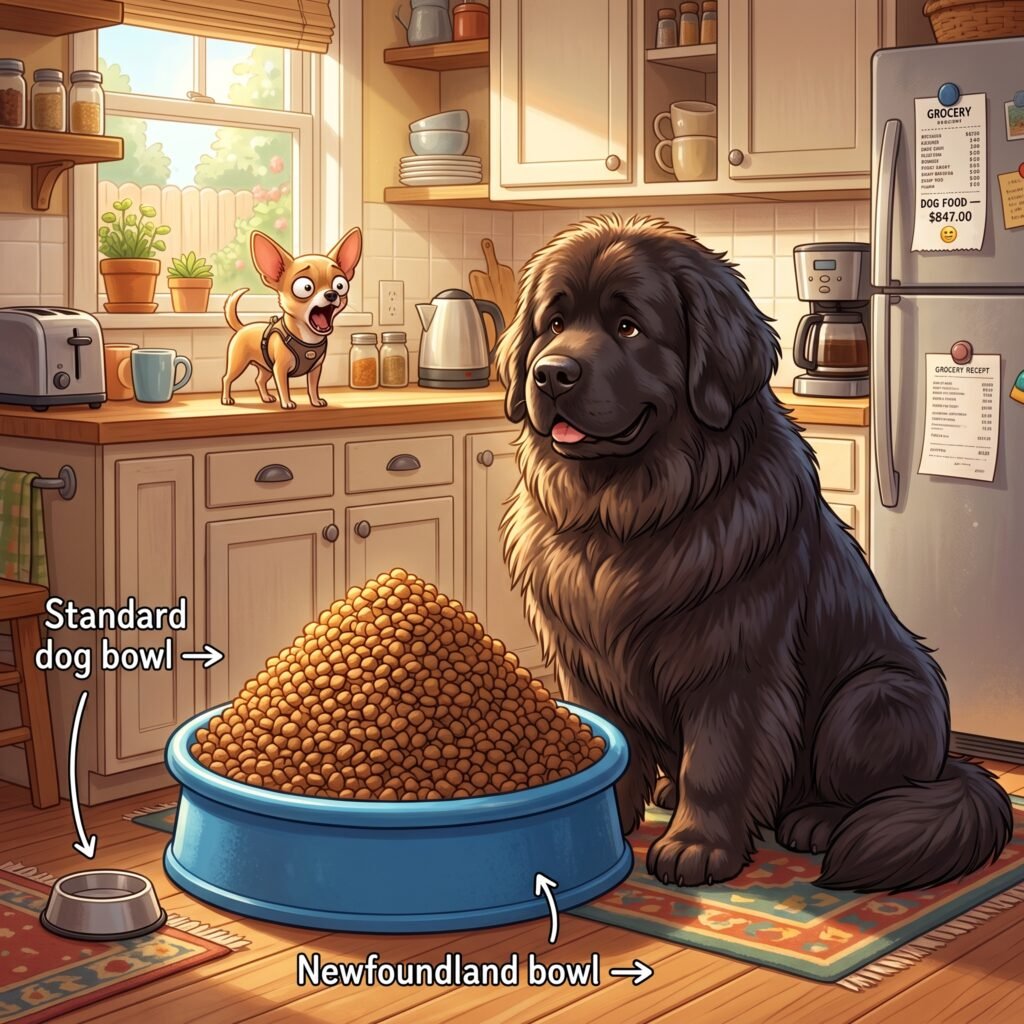
Mature Newfoundland dogs need about four to six cups of dry food per day, divided into two meals of two to three cups per meal. Always verify this against the specific food’s caloric density — formulas vary from 340–449 kcal/cup across the brands in this guide.
Body condition should be assessed monthly. For a Newfoundland at ideal weight, you should be able to feel the ribs under their thick coat without pressing hard, but not see them. A waist should be visible from above; a slight abdominal tuck from the side. The thick Newfoundland coat can mask weight changes — use hand palpation over visual assessment.
Best Dog Food for Senior Newfoundlands
Senior Newfoundlands (7 years and older) need key nutritional adjustments. As Newfoundlands age, their metabolism slows down and they become less active. Your dog can gain weight if their diet is not properly adjusted. In general, senior Newfoundlands need fewer calories. However, they need more fiber, antioxidants, and omega-3 fatty acids — and critically, protein should not be reduced.
The instinct to reduce protein in senior dogs is outdated. Senior dogs are at elevated risk of sarcopenia (age-related muscle loss), and protein reduction accelerates this decline. The best dog food for Newfoundland seniors maintains or slightly increases protein while reducing overall caloric density through lower fat content.
Key adjustments when transitioning to senior dog food for Newfoundland dogs:
- Maintain protein at 24–28% (do not reduce below 22%)
- Increase omega-3 content from marine sources for joint and cardiac support
- Reduce fat to 10–13% if the dog is less active
- Add or verify glucosamine and chondroitin at therapeutic levels
- Consider partially transitioning to wet food for improved palatability and hydration
- Discuss omega-3 fish oil supplementation with your vet for dogs with visible joint stiffness
- Also consider joint supplements for your dog — glucosamine or chondroitin supplements may help keep your dog active for longer
Top senior picks: Purina Pro Plan Bright Mind Adult 7+ Large Breed, Hill’s Science Diet Adult 7+ Large Breed, Royal Canin Giant Adult.
Grain-Free Dog Food and Newfoundlands: The Heart Disease Risk
This section deserves direct, unambiguous treatment because of the Newfoundland’s cardiac predisposition.
The FDA has been investigating a potential link between grain-free diets high in legumes (peas, lentils, chickpeas, potatoes) and dilated cardiomyopathy in dogs since 2018. DCM is primarily believed to be a genetic disease most commonly found in giant dog breeds — the exact category Newfoundlands belong to.
Grain-free diets have been linked to diet-associated DCM, so unless your dog has a medical need for a grain-free diet, stick with balanced foods containing wholesome grains like brown rice or oatmeal.
For most Newfoundland owners, this translates to a clear recommendation: choose grain-inclusive formulas with high-quality whole grain carbohydrates (brown rice, oatmeal, barley) rather than legume-heavy grain-free alternatives. The DCM investigation has not established a definitive causal mechanism as of June 2026, but for a breed already carrying genetic cardiac risk, the precautionary logic is compelling.
If your Newfoundland has a confirmed grain allergy or sensitivity requiring a grain-free diet, discuss this with your veterinarian. Cardiac monitoring (echocardiogram) is advisable for any Newfoundland on a long-term grain-free diet.
Feeding Schedule and Portion Guide for Newfoundlands
Given the GDV risk, the feeding schedule for your Newfoundland is as important as the food itself.
Non-negotiable GDV prevention rules:
- Always feed at least two meals per day — never one large meal
- Enforce a 45–60 minute rest period before and after every meal — no vigorous exercise in this window
- Use a slow-feeder bowl to extend eating time by 4–8x
- Never allow free-choice feeding
- Keep fresh water continuously available
- Consider prophylactic gastropexy at the time of spay/neuter — discuss with your veterinarian
Approximate daily portion guide (adult Newfoundland, dry kibble at ~380 kcal/cup):
| Dog Weight | Low Activity | Moderate Activity | High Activity |
|---|---|---|---|
| 100 lbs | 4–4.5 cups | 4.5–5.5 cups | 5.5–6.5 cups |
| 120 lbs | 4.5–5 cups | 5.5–6.5 cups | 6.5–7.5 cups |
| 140 lbs | 5–6 cups | 6–7 cups | 7–8 cups |
Always weigh food on a digital kitchen scale — measuring cup variations of 20–30% are common and compound significantly over weeks for a dog this size.
Ingredients Newfoundlands Should Never Eat
Toxic to all dogs:
- Grapes and raisins (kidney failure)
- Onions, garlic, leeks, chives (red blood cell destruction)
- Chocolate (theobromine toxicity)
- Xylitol (hypoglycemia, liver failure — present in some peanut butters and sugar-free products)
- Macadamia nuts
- Raw yeast dough
Specifically concerning for Newfoundlands:
- High-fat single meals or treats — dramatically increase GDV risk and cardiovascular strain
- High-sodium human foods (processed meats, cheese in large amounts, chips) — particularly risky for cardiac-predisposed dogs
- Grain-free, legume-heavy commercial diets fed long-term — DCM risk for a genetically predisposed breed
- Large food portions given all at once — even the best dog food for Newfoundland dogs becomes a health risk in a single giant meal
Frequently Asked Questions About Dog Food for Newfoundland Dogs
What is the best dog food brand for Newfoundland dogs in 2026?
The best dog food brand for Newfoundland dogs in 2026 depends on specific needs. For most healthy adult Newfoundlands, Purina Pro Plan Large Breed (Chicken and Rice) offers the strongest combination of clinical backing, joint support, grain-inclusive cardiac safety, and digestive health through live probiotics. For cardiac-focused nutrition, Hill’s Science Diet Large Breed is the most evidence-supported option. For premium ingredient quality, Orijen Large Breed leads the market.
How much food does a Newfoundland dog need per day?
Mature Newfoundland dogs need about four to six cups of dry food per day, divided into two meals with two to three cups per meal. This assumes a formula at approximately 380 kcal/cup. Always calculate based on your specific food’s caloric density and your dog’s actual weight and activity level using the RER formula: 70 x (body weight in kg to the power of 0.75), multiplied by an activity factor of 1.4–1.8.
Is grain-free dog food safe for Newfoundlands?
No — not as a default choice. Newfoundlands are predisposed to DCM, and grain-free diets high in legumes have been linked to diet-associated DCM by the FDA. Unless your Newfoundland has a confirmed grain allergy requiring grain-free feeding, the best dog food for Newfoundland dogs is grain-inclusive using whole food carbohydrates like brown rice, oatmeal, or barley.
When should I switch my Newfoundland puppy to adult food?
Newfoundland puppies generally switch to an adult diet at around four to six months old, even though they are biologically still growing. This earlier-than-expected switch is done to prevent overly rapid growth. Use a large or giant breed adult formula from this point until two years of age, when your Newfoundland has reached full skeletal maturity.
What nutrients are most important in dog food for Newfoundland dogs?
The five most important nutrients in dog food for Newfoundland dogs are: glucosamine and chondroitin for joint support, marine-source omega-3 fatty acids (EPA/DHA) for joint inflammation and cardiac health, taurine for cardiac muscle function, controlled calcium-to-phosphorus ratios for skeletal development (especially in puppies), and high-quality named animal protein for muscle maintenance throughout their lifespan.
How do I prevent my Newfoundland from getting bloat through their diet?
Preventing GDV in Newfoundlands requires feeding management alongside diet selection. Feed two meals per day rather than one large meal, use a slow-feeder bowl, enforce rest periods of 45–60 minutes before and after meals, and choose a digestible formula without highly fermentable ingredients. Also discuss prophylactic gastropexy with your veterinarian — this procedure can be performed at the time of spay or neuter and eliminates the GDV risk.
Final Verdict: Choosing the Best Dog Food for Newfoundland Dogs
The best dog food for Newfoundland dogs is not simply the most expensive formula or the one with the longest ingredient list. It is the food that addresses what makes this breed biologically distinct — the giant-breed growth curve that demands calcium control, the joint load that demands glucosamine and omega-3s from the first bowl, the cardiac predispositions that demand grain-inclusive formulas with taurine support, and the GDV risk that demands digestible ingredients and disciplined feeding structure.
Choose dog food for Newfoundland dogs with these non-negotiables in every bag: named animal protein first, grain-inclusive carbohydrates, joint nutrients in the guaranteed analysis, marine omega-3 from fish oil or salmon, chelated minerals, and AAFCO certification for the correct life stage.
Our top recommendations by situation:
The best dog food for Newfoundland adults in most situations: Purina Pro Plan Large Breed (Chicken and Rice) — the most clinically backed, joint-supportive, cardiac-safe formula available without a prescription.
The best dog food brand for Newfoundland cardiac health: Hill’s Science Diet Large Breed — controlled sodium, L-carnitine, grain-inclusive, and clinically proven.
The best dog food for Newfoundlands with premium ingredient priorities: Orijen Large Breed — highest meat content and natural taurine from fresh organ inclusions.
The best dog food for Newfoundland puppies: Purina Pro Plan Large Breed Puppy or Royal Canin Giant Puppy — both AAFCO feeding trial certified with giant-breed-specific calcium control.
The best value dog food for Newfoundland dogs: Diamond Naturals Large Breed Adult — strong ingredient quality at a price that makes sense for a 120-pound dog eating six cups per day.
Your Newfoundland deserves food that was chosen with their specific giant-breed biology in mind. Feed them the right formula from the right life stage, manage portions with a scale, never feed one large daily meal, and schedule joint-support supplements proactively — and you give this gentle giant the nutritional foundation to live fully through every one of their years.
This guide is for educational purposes only and does not constitute veterinary medical advice. Always consult a licensed veterinarian before making significant dietary changes, especially for Newfoundlands with existing cardiac, joint, or digestive conditions.