
No Carbohydrate Dog Food: What It Means, Whether It's Possible, and How to Get as Close as Realistically Can
Updated: June 2026 · Science-Referenced · No Sponsored Content · Under 4,000 Words

The question seems simple: can you feed your dog a no carbohydrate dog food? The answer turns out to be more layered than most guides admit. Yes, dogs have zero biological requirement for carbohydrates. Yes, some foods come extremely close to zero carbs. But true, absolute zero is essentially impossible in any commercial or homemade diet — and chasing that number for the wrong reasons can create problems the no-carb movement rarely mentions.
This guide gives you the complete picture: the science behind why carbs are technically unnecessary for dogs, the research that makes low-carb diets genuinely interesting, what “no carbohydrate dog food” realistically means, which foods come closest, which dogs benefit most, and what to watch for when you go down this path.
Navigate This Guide
- The Science: Do Dogs Actually Need Carbohydrates?
- Why Most Commercial Dog Food Is Loaded with Carbs
- The 2025 Helsinki Study: What New Research Says
- What “No Carbohydrate Dog Food” Actually Means in Practice
- How to Read Carbohydrate Content on a Dog Food Label
- The Lowest-Carb Food Options Available in 2026
- Which Dogs Benefit Most from a No or Very Low Carb Diet
- Risks and Limitations of Zero-Carb Feeding
- Practical Transition Guide
- Frequently Asked Questions
- Final Verdict
The Science: Do Dogs Actually Need Carbohydrates?
Zero. That is the number of carbohydrates the National Research Council identifies as nutritionally required for a dog to sustain life. According to the National Research Council and compared to the other two major nutrients — protein and fat — no carbs are considered essential for a healthy canine diet.
This is not a fringe opinion or a marketing claim — it is the position of the most authoritative body in companion animal nutrition. Dogs are classified biologically as omnivores, but their metabolic wiring leans strongly toward animal-based macronutrients. Protein and fat supply everything a dog needs: energy, essential fatty acids, amino acids, fat-soluble vitamins, and the building blocks for every physiological process.
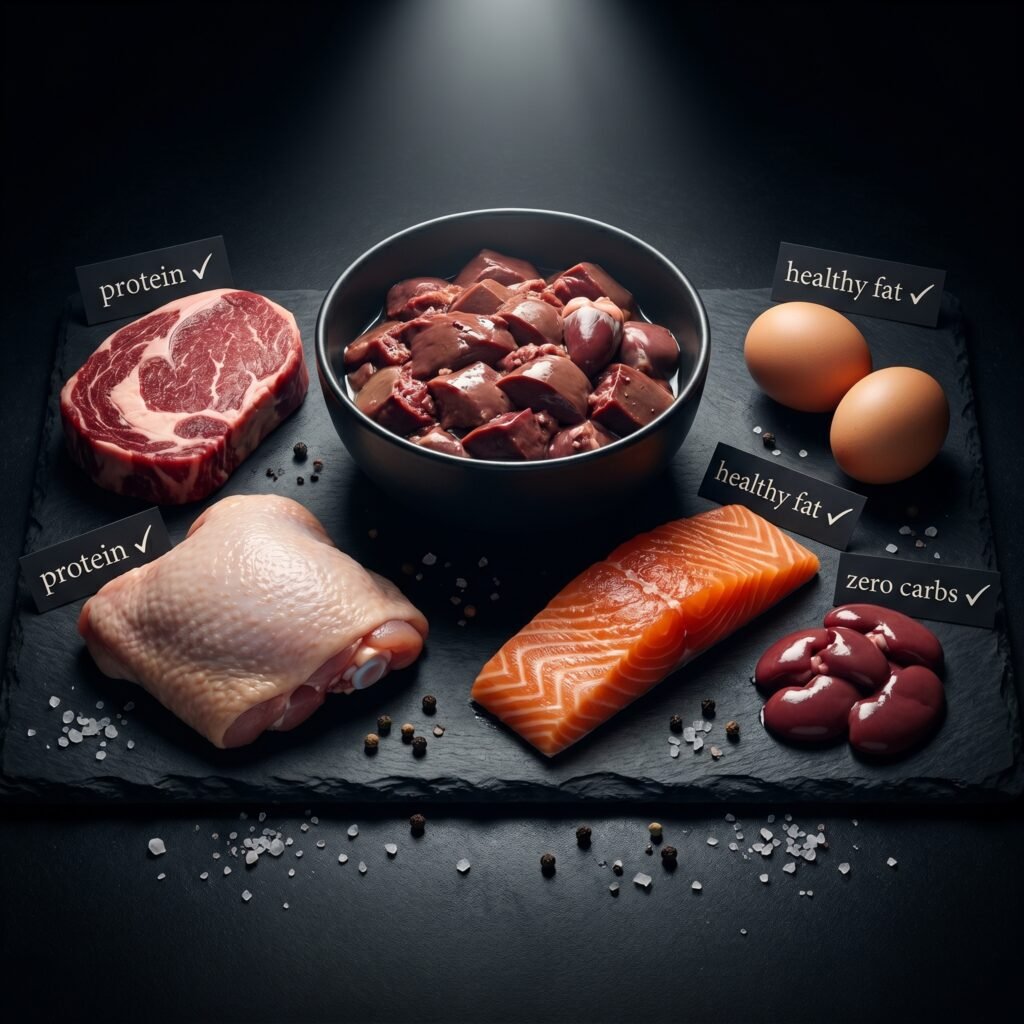
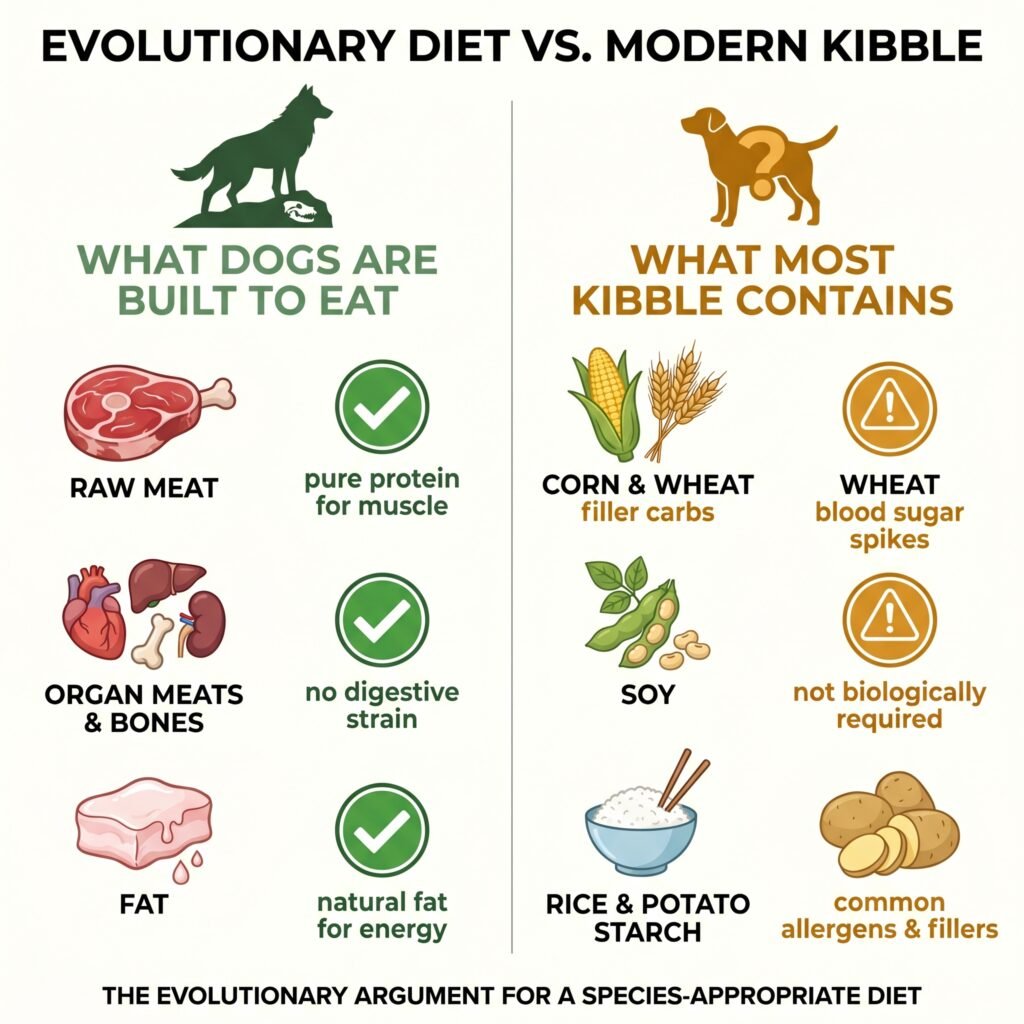
A dog’s predecessor, the wolf, has a diet consisting of 54% protein, 45% fat and only 1% carbohydrates. While dogs can benefit from nutrient-rich complex carbs like broccoli or carrots, simple carbs that need to be cooked like rice or potatoes are not naturally eaten.
The fact that dogs can digest and metabolize carbohydrates — and have evolved some capacity to do so since living alongside grain-farming humans — does not mean carbohydrates serve an essential role. The body’s ability to process something and its biological requirement for that substance are two entirely different questions.
The fact that dog food doesn’t need to contain any carbohydrates at all seems hard to believe, but the National Research Council says they’re not considered essential. Yet according to the National Research Council, today’s dry dog foods contain on average somewhere between 46% and 74% carbohydrates.
The gap between what dogs require and what they are typically fed is enormous — and that gap is the entire reason the no carbohydrate dog food conversation exists.
Why Most Commercial Dog Food Is Loaded with Carbohydrates
Understanding why the pet food industry defaults to high-carbohydrate formulas helps contextualize why no carbohydrate dog food is genuinely difficult to find on a standard shelf.
The Kibble Manufacturing Problem
Because the extrusion process — the primary way that kibble is manufactured — requires the use of carby ingredients as binders, there just aren’t that many low-carb kibbles on the market.
Dry kibble is made by forcing a wet dough mixture through a machine called an extruder under high heat and pressure. Starch is what binds the dough, holds the kibble shape after it exits the extruder, and allows it to dry into the shelf-stable pellets that fill bags on store shelves. Without meaningful starch content, the extrusion process either fails or produces kibble that crumbles on contact.
This is a pure engineering constraint, not a nutritional one. It means that any dry kibble — regardless of how premium its protein sources are — will contain a minimum level of carbohydrates simply to function as a formed food product.
The Economics of Carbohydrates
Beyond the manufacturing requirement, carbohydrates are cheap. Carbohydrates are a cheap filler ingredient to bulk up their dog food. Corn, rice, wheat, barley, and potato starch cost a fraction of what quality animal protein costs. For a manufacturer trying to hit a competitive price point, increasing the carbohydrate fraction and decreasing the meat fraction is the single most effective cost-reduction lever available.
This is why budget dog foods frequently show 60–70% carbohydrates on a dry matter basis. It is not that carbs are good for dogs at those levels — it is that they are profitable.
The Result: Chronic Overconsumption of an Inessential Nutrient
Many lower-cost kibble brands use refined carbohydrates like corn, wheat, rice, and potatoes as cheap fillers. These ingredients boost calorie content but add very little in terms of nutritional value. Over time, a carb-heavy diet can contribute to weight gain, inflammation, and blood sugar spikes.
The combination of metabolic unsuitability and chronic overconsumption is what drives the growing interest in no carbohydrate dog food — and what the most recent research has now begun to quantify.
The 2025 Helsinki Study: What New Research Actually Says
One of the most significant recent developments in canine nutrition science directly addresses the metabolic consequences of high-carbohydrate versus near-zero-carbohydrate feeding.
A high-carbohydrate kibble diet and a low-carbohydrate raw meat-based diet have markedly different effects on dogs’ energy metabolism, according to a new study carried out by the DogRisk research group at the University of Helsinki published in The Veterinary Journal. In the study, 46 Staffordshire Bull Terriers were fed either kibble or a raw food diet for an average of 4.5 months. The kibble diet was rich in non-fiber carbohydrates, while the raw food diet was high in fat and contained no non-fiber carbohydrates.
Finnish researchers fed 46 Staffordshire Bull Terriers either high-carb kibble (48.4% carbohydrates) or carb-free raw meat diets for about 4.5 months, then compared their blood work. Dogs eating kibble showed increases in long-term blood sugar markers, total cholesterol, and body weight. One dog’s blood fats climbed so high they couldn’t be measured using standard formulas. Dogs eating raw meat showed decreases in blood sugar, cholesterol, and a marker linked to insulin function. Their bodies also shifted to burning fat for energy instead of carbohydrates.
A 2025 study from the University of Helsinki’s DogRisk group showed that dogs on high-carb kibble developed increased markers for insulin resistance. Meanwhile, the group on a low-carb, high-fat raw diet showed significantly improved metabolic health, including a healthy surge in ketone bodies.
This is peer-reviewed research, published in The Veterinary Journal, with a citation available for independent verification. It is not a marketing study. It is also not the final word — this was a small study in one breed using specific commercial diets. Whether these metabolic changes affect long-term health in dogs remains unknown.
What the study adds to the conversation is a measurable, physiological argument for reducing carbohydrate load in dogs — not just the ancestral diet philosophy, but actual blood biomarker differences. For dogs already showing signs of insulin resistance, obesity, or metabolic dysfunction, this research provides a credible scientific basis for moving toward no carbohydrate dog food approaches.
What “No Carbohydrate Dog Food” Actually Means in Practice
Here is the honest answer that most guides avoid: true, absolute zero carbohydrate dog food does not commercially exist in any complete and balanced formula.
Even raw meat contains trace amounts of glycogen — animal starch stored in muscle tissue. Organ meats contain small amounts of glycogen as well. Any vegetable inclusion, any fruit, any fiber source adds carbohydrates by definition. And any AAFCO-complete food must include vitamins and minerals, many of which come in carriers that add negligible but real carbohydrate traces.
What the term “no carbohydrate dog food” practically refers to is food that falls into one of these categories:
Near-zero carb (under 5% dry matter basis): Raw meat-based diets, some freeze-dried formulas, some fresh gently cooked diets. These achieve carbohydrate levels as low as 1–3% on a dry matter basis.
Very low carb (5–15% dry matter basis): The lowest-carbohydrate commercial dry kibbles, including Orijen, Ketona, and Visionary Pet Foods. Ketona boasts a dog food that has 85% less carbohydrates than other grain-free brands. This product is made with less than 6% starch and 0.5% sugar.
Low carb (15–25% dry matter basis): Premium grain-free kibbles from brands like Acana, Stella & Chewy’s, and some Instinct formulas. These are meaningfully lower than the 46–74% average but are not close to zero.
The clearest practical path to no carbohydrate dog food is through raw or freeze-dried raw feeding. Brands such as Stella & Chewy’s Super Beef Frozen Raw Dinner Morsels and Instinct Adult Frozen Raw Bite 85% Alaskan Pollock Recipe are low-carb options available on the market for pet owners looking for a low-carbohydrate food.
How to Read Carbohydrate Content on a Dog Food Label
Carbohydrate content is the one major macronutrient that is never required to appear on a dog food label. It must be calculated — and most owners never do this.
The Calculation
Every guaranteed analysis panel lists protein, fat, fiber, moisture, and ash (sometimes). Carbohydrates are everything left over.
Estimated Carbohydrate % = 100 – Protein% – Fat% – Fiber% – Moisture% – Ash%
If ash is not listed, use 6% as a standard estimate for dry food and 2% for wet food.
Example calculation for a standard adult dry kibble:
- Protein: 26%
- Fat: 14%
- Fiber: 4%
- Moisture: 10%
- Ash (estimated): 6%
- Estimated carbohydrates: 100 – 26 – 14 – 4 – 10 – 6 = 40%
For a fair comparison between dry and wet foods, always convert to dry matter basis by removing the moisture from the equation:
Dry Matter Carbs = (As-Fed Carbs / (100 – Moisture%)) x 100
This single calculation is the most important skill in evaluating no carbohydrate dog food claims. A wet food showing 3% fat and 8% protein on the label looks very different from a dry kibble — but on a dry matter basis, the comparison becomes meaningful.
What Numbers to Target
| Carbohydrate Level | Dry Matter % | Food Category |
|---|---|---|
| True zero/near-zero | 0–5% | Raw, freeze-dried raw |
| Very low | 5–15% | Ultra-low carb kibble, most freeze-dried |
| Low | 15–25% | Premium grain-free kibble |
| Moderate | 25–40% | Standard grain-free, most mid-range kibble |
| High | 40–60% | Average commercial dry food |
| Very high | 60%+ | Budget grocery-store kibble |
The Lowest-Carb Dog Food Options Available in 2026
These are the closest commercially available options to genuine no carbohydrate dog food, organized from lowest to higher carbohydrate content.
Raw and Freeze-Dried Raw: The Closest to Zero
Stella & Chewy’s Frozen Raw Dinner Morsels (Beef) Frozen raw formulas from Stella & Chewy’s routinely achieve 1–4% carbohydrates on a dry matter basis. The beef formula features grass-fed beef, beef organ meats, and ground bone as the primary ingredients. Carbohydrate content comes almost entirely from trace amounts in the fruit and vegetable additions (cranberries, pumpkin seed).
- Protein (DMB): ~50–55%
- Fat (DMB): ~38–42%
- Carbs (DMB): ~3–5%
- AAFCO complete: Yes
Instinct Frozen Raw Bites (Alaskan Pollock) A fish-based frozen raw formula with near-zero carbohydrate content. Pollock, pollock liver, and pollock oil dominate the macronutrient profile. The carbohydrate content comes from trace amounts in minor ingredient inclusions.
- Protein (DMB): ~55–60%
- Fat (DMB): ~30–35%
- Carbs (DMB): ~3–5%
- AAFCO complete: Yes
The Farmer’s Dog Fresh Chicken Formula Our very favorite low-carb dog food is The Farmer’s Dog Chicken recipe. The first six ingredients are Chicken, Brussels sprouts, chicken liver, bok choy, and broccoli, none of which are carb-heavy foods, and you won’t find any carb-filled grains or starches lurking further down the list. Gently cooked and delivered frozen, this human-grade food achieves carbohydrate levels in the 15–20% DMB range — not zero, but dramatically lower than standard kibble with whole-food vegetable carbs rather than refined starches.
Ultra-Low Carb Kibble: The Best Dry Options
Ketona Chicken Recipe The most carbohydrate-reduced dry kibble currently available. Ketona boasts a dog food that has 85% less carbohydrates than other grain-free brands. This product is made with less than 6% starch and 0.5% sugar. Achieves this by using a manufacturing process that minimizes binder starch requirements while maintaining structural integrity. The trade-off is a higher price per pound than standard premium kibble.
- Protein (DMB): ~46%
- Fat (DMB): ~38%
- Carbs (DMB): ~6–8%
- AAFCO complete: Yes
Visionary Pet Foods Keto Low Carb Dry Dog Food The Visionary Pet Foods Keto Low Carb Dry Dog Food is packed with 43% protein and free from grain and gluten. It is suitable for low-carb and high-protein diets and is used for dogs with very sensitive digestion. One of the few kibbles explicitly marketed as a ketogenic-style formula with carbohydrates under 10% on a dry matter basis.
Orijen Original In the case of Orijen, the carby ingredients are also low-GI ones. Orijen’s Original formula features 85% animal ingredients, 15% fruits, vegetables, and botanicals, with no starchy filler carbohydrates. On a dry matter basis, carbohydrate content runs approximately 18–22% — not zero, but among the lowest available in a widely distributed premium dry kibble.
- Protein (DMB): ~38–40%
- Fat (DMB): ~18–20%
- Carbs (DMB): ~18–22%
- AAFCO complete: Yes
Raised Right (Fresh Beef) Dry matter label analysis shows the recipe contains 61% protein, 24% fat and 8% estimated carbs. All recipes contain a single source of animal protein with no hidden fillers and are made from human-grade ingredients. One of the best high-protein fresh foods on the market.
Brothers Complete Ultra Premium Dry matter label analysis reveals it contains 40.8% protein, 18.5% fat and 29% carbohydrates. Zero grains, potatoes, corn, wheat, soy, or artificial additives. Not zero carb, but a legitimate ultra-high-protein dry option.
Comparison Table
| Food | Format | Carbs (DMB) | Protein (DMB) | Fat (DMB) |
|---|---|---|---|---|
| Stella & Chewy’s Frozen Raw (Beef) | Frozen raw | ~3–5% | ~52% | ~40% |
| Instinct Frozen Raw Bites (Pollock) | Frozen raw | ~3–5% | ~57% | ~32% |
| Raised Right Fresh (Beef) | Gently cooked | ~8% | ~61% | ~24% |
| Ketona (Chicken) | Dry kibble | ~6–8% | ~46% | ~38% |
| Visionary Pet Keto | Dry kibble | ~8–10% | ~43% | ~35% |
| Orijen Original | Dry kibble | ~18–22% | ~38% | ~19% |
| The Farmer’s Dog (Chicken) | Gently cooked | ~15–20% | ~40% | ~35% |
| Average standard kibble | Dry kibble | ~46–60% | ~26% | ~14% |
Which Dogs Benefit Most from No or Very Low Carbohydrate Dog Food
Not every dog has the same need for carbohydrate reduction. The evidence base for near-zero carbohydrate feeding is strongest in these specific situations:
Dogs with Diabetes Mellitus
Canine diabetes is an insulin-dependent condition in which blood glucose cannot be properly regulated. We believe there’s sufficient research to suggest a carbohydrate level greater than 30% of a dog’s diet can lead to diabetes, obesity, thyroid disease and more. For dogs that already have diabetes, reducing dietary carbohydrates directly reduces the glucose load the pancreas must manage. Many veterinary internists managing diabetic dogs now recommend low-carbohydrate, high-protein diets as a primary component of glycemic control.
Overweight and Obese Dogs
Dogs on the kibble diet showed increased long-term blood sugar, blood lipids, and bodyweight. Dogs on the raw food diet showed decreased blood sugar, blood lipids, and glucagon levels. For dogs that have gained weight on carbohydrate-heavy commercial diets, moving to no carbohydrate dog food or a near-zero-carb diet can shift energy metabolism from glucose-burning to fat-burning — supporting weight loss while maintaining or building lean muscle.
Dogs with Epilepsy
The ketogenic diet — characterized by very high fat, very low carbohydrate intake — has an established therapeutic role in seizure management in human medicine. Preliminary veterinary evidence suggests similar mechanisms may apply in dogs with drug-resistant epilepsy. A high-protein, high-fat dog food closely aligns with a ketogenic “keto” diet model. This application requires direct veterinary supervision and is not a substitute for anticonvulsant medication in most cases.
Dogs with Cancer
A 2025 study from the University of Helsinki’s DogRisk group showed that dogs on high-carb kibble developed increased markers for insulin resistance. Meanwhile, the group on a low-carb, high-fat raw diet showed significantly improved metabolic health. Many cancer cells preferentially use glucose as their primary energy source — a phenomenon known as the Warburg effect. The theoretical basis for using low-carbohydrate diets in canine cancer management is that starving cancer cells of glucose while providing alternative fuel (fat and ketones) to healthy cells may slow tumor growth. This is an active area of veterinary oncology research; consult a veterinary oncologist before applying it.
Dogs with Chronic GI Inflammation
Traditional kibble is often packed with low-quality carbs that offer minimal nutritional value and contribute to issues like weight gain, inflammation, and blood sugar spikes. For dogs with chronic inflammatory bowel disease or GI sensitivity, removing the fermentable carbohydrate load — particularly from refined grains and starches — can reduce gut inflammation and improve stool quality.
Healthy Dogs with Carbohydrate-Sensitive Genetics
Certain breeds appear to handle carbohydrates less efficiently than others. Labrador Retrievers with the POMC gene mutation that impairs satiety signaling are particularly prone to carbohydrate-driven weight gain. Breeds historically predisposed to metabolic disorders, diabetes, and pancreatitis (Miniature Schnauzers, Dachshunds, Cocker Spaniels) may benefit from proactive carbohydrate reduction as a preventative strategy.
Risks and Limitations of Zero-Carb Feeding
A complete picture of no carbohydrate dog food requires honest discussion of what can go wrong.
Nutritional Completeness Is Non-Negotiable
The most significant risk of no carbohydrate dog food — particularly raw and homemade diets — is nutritional incompleteness. A diet of pure muscle meat, while low in carbohydrates, is severely deficient in calcium, zinc, vitamin D, iodine, and multiple other essential micronutrients. Dogs fed unbalanced raw diets over extended periods develop nutritional diseases that can be as serious as any diet-related condition.
No carbohydrate dog food must still be nutritionally complete. This means either using commercial formulas with an AAFCO nutritional adequacy statement or working with a board-certified veterinary nutritionist to formulate a home-prepared diet with appropriate supplementation.
The Fat Load Consideration
Moving calories from carbohydrates to fat and protein requires that both macronutrients increase substantially. For dogs with a history of pancreatitis, high-fat diets can trigger pancreatic inflammation — a serious, potentially life-threatening condition. Dogs with hyperlipidemia or certain liver conditions may also poorly tolerate very high fat intakes.
Before transitioning a dog with any of these conditions to no carbohydrate dog food, veterinary evaluation including a lipid panel is strongly advisable.
Fiber Has Value Beyond Carbohydrate Content
Not all carbohydrates are starch. Dietary fiber — both soluble and insoluble — serves important functions in gut motility, microbiome health, and stool consistency. These benefits are distinct from the problematic aspects of refined starch consumption. A no carbohydrate dog food approach that eliminates beneficial fiber from vegetables, psyllium, or chicory root may impair gut health over time. The goal should be eliminating starchy, high-glycemic carbohydrates — not eliminating fibrous vegetables that happen to contain some carbohydrate.
Cost and Practicality
Raw frozen and freeze-dried raw diets are significantly more expensive than standard dry kibble. The lowest-carb commercial kibbles (Ketona, Visionary Pet) carry premium price points. For multi-dog households or owners on a constrained budget, genuine no carbohydrate dog food may not be financially sustainable as a permanent feeding strategy.
Practical Transition Guide
If you have decided that moving toward no carbohydrate dog food makes sense for your dog, here is how to do it without causing digestive disruption.
Step 1: Choose Your Target Format
Decide whether you are targeting raw/freeze-dried raw (near-zero carbs), ultra-low-carb kibble (6–10% DMB), or a blended approach mixing high-protein kibble with raw toppers. Each has different cost, convenience, and nutritional implications.
Step 2: Transition Gradually
A dramatic shift from 50% carbohydrate kibble to raw zero-carb food creates significant digestive disruption. The gut microbiome needs time to adapt to a radically different macronutrient substrate. Follow this schedule:
Week 1: 80% current food / 20% new food Week 2: 60% current / 40% new Week 3: 40% current / 60% new Week 4: 20% current / 80% new Week 5: 100% new food
Monitor stool consistency throughout. Soft stools are normal during transition. Watery diarrhea persisting more than three days warrants slowing the transition pace.
Step 3: Verify Nutritional Completeness
Before committing to any no carbohydrate dog food long-term, confirm that the formula carries an AAFCO nutritional adequacy statement for the appropriate life stage. If using homemade raw, engage a veterinary nutritionist to formulate and supplement the diet properly before starting.
Step 4: Schedule a Vet Check at 6 Weeks
A blood panel and urinalysis at 6 weeks into the new diet gives objective data on how your dog’s metabolism is responding. Key markers to evaluate: blood glucose, triglycerides, cholesterol, kidney values (BUN and creatinine), and liver values. Adjust based on results.
Step 5: Monitor Body Condition Monthly
Use the Body Condition Score system (1–9 scale, with 4–5 ideal) to track whether the new macronutrient profile is supporting healthy weight. Dogs that lose weight too rapidly on a no carbohydrate dog food transition may need increased fat content or total daily calories adjusted upward.
Frequently Asked Questions
Can dogs survive on zero carbohydrates?
Yes. Dogs have no biological requirement for carbohydrates. They can derive all necessary energy from protein and fat through gluconeogenesis (making glucose from amino acids) and ketogenesis (burning fat for fuel). Wolf populations survive on diets of approximately 1% carbohydrates with no apparent deficiency. However, zero carbohydrate does not mean zero nutrition — a no carbohydrate dog food must still be complete and balanced for proteins, fats, vitamins, and minerals.
Is no carbohydrate dog food the same as grain-free dog food?
No. Grain-free dog food removes wheat, corn, barley, oats, and rice, but typically replaces them with legume-based carbohydrates including peas, lentils, chickpeas, and tapioca. Most grain-free kibbles contain 20–35% carbohydrates on a dry matter basis. They are lower in carbs than grain-inclusive formulas but are not no carbohydrate dog food by any reasonable definition.
Does my healthy dog need a no carbohydrate diet?
Not necessarily. A healthy dog on a quality, moderate-carbohydrate diet with named animal protein, digestible whole-food carbohydrates, and appropriate caloric intake may thrive without intervention. The strongest evidence for no carbohydrate dog food benefits involves metabolically compromised dogs: those with diabetes, obesity, epilepsy, cancer, or chronic GI inflammation. For a healthy adult dog with normal weight and no metabolic issues, reducing carbohydrates from 60% to 25% may be more beneficial and realistic than pursuing true zero-carb feeding.
What is the easiest way to feed a no carbohydrate diet?
Freeze-dried raw food is the most practical balance between carbohydrate minimization, convenience, and cost. Brands like Stella & Chewy’s and Instinct produce freeze-dried patties and morsels that achieve near-zero carbohydrate content, are shelf-stable without refrigeration until opened, and require no preparation beyond rehydrating or serving directly. They are more expensive than kibble but significantly more affordable than fresh-delivered raw subscriptions.
Is the DCM risk relevant to no carbohydrate dog food?
The FDA’s investigation into dilated cardiomyopathy (DCM) and grain-free diets focused specifically on legume-heavy grain-free kibbles — foods high in peas, lentils, and chickpeas. No carbohydrate dog food based on raw meat, freeze-dried raw, or meat-only diets does not rely on legumes and is not the same dietary category under investigation. The DCM concern is specifically about legume-heavy grain-free kibble, not about low-carbohydrate or raw meat-based diets more broadly.
Final Verdict: What “No Carbohydrate Dog Food” Actually Delivers
Here is the honest summary.
True zero carbohydrate dog food does not exist in any complete and balanced commercial formula. What does exist is a meaningful spectrum of foods that reduce carbohydrate load from the industry average of 46–74% down to as low as 1–5% in raw and freeze-dried raw formats.
The science supporting this reduction — particularly the 2025 University of Helsinki study showing measurable metabolic improvements in dogs fed zero non-fiber carbohydrate diets versus high-carbohydrate kibble — is real, peer-reviewed, and clinically relevant. It is also still early. Long-term outcome data for dogs on very low carbohydrate diets across their full lifespan does not yet exist at scale.
What is clear: the National Research Council’s statement that dogs have zero biological requirement for carbohydrates, combined with growing metabolic research showing that high-carbohydrate diets produce measurable markers of insulin resistance and weight gain, creates a credible evidence-based case for reducing carbohydrate intake in dogs — particularly those already showing metabolic stress.
The practical path forward depends on your dog’s health status, your budget, and your feeding logistics:
For dogs with metabolic conditions (diabetes, obesity, epilepsy, cancer): near-zero carbohydrate feeding through raw or freeze-dried raw, under veterinary supervision, has the strongest evidence base.
For healthy dogs where you want meaningful carbohydrate reduction without raw feeding: Ketona, Visionary Pet Foods, or Orijen represent the lowest-carbohydrate commercial dry options available.
For owners wanting a middle path: a blended approach — quality moderate-protein kibble with freeze-dried raw toppers — achieves meaningful carbohydrate reduction at lower cost than full raw feeding.
Whatever path you choose, verify nutritional completeness, transition gradually, and monitor metabolic markers. No carbohydrate dog food is a legitimate nutritional approach with real science behind it — but it requires more active management than opening a bag of standard kibble and trusting the label.
This article is for educational purposes only and does not constitute veterinary medical advice. Dogs with diagnosed health conditions should have dietary changes supervised by a licensed veterinarian.