Best Duck Dog Food in 2026: Top Vet-Recommended Picks for Dogs With Allergies
Is duck the answer to your dog's allergies? We break down the best duck dog food brands — dry, wet, and limited ingredient — plus what to look for on the label. Find your dog's match today.
Duck Dog Food: Complete 2026 Guide — Benefits, Best Brands, NSDTR Nutrition & More
Duck has quietly become one of the most important proteins in the premium dog food market — and not simply because it sounds exotic. Duck dog food occupies a genuinely valuable nutritional and immunological position: it is rich in iron, naturally high in omega fatty acids, highly palatable to most dogs, and for millions of dogs whose primary proteins have been chicken or beef, duck remains a genuinely novel protein capable of resetting an overloaded immune system and resolving allergy symptoms that conventional foods have failed to address. In 2026, the range of quality duck dog food options available to American dog owners has expanded dramatically — from premium limited ingredient kibbles and grain-free formulas to wet food, freeze-dried, and fresh-cooked options — giving owners more choices than ever to find exactly the right fit for their dog’s needs.
This comprehensive guide covers every important dimension of duck dog food: the science behind duck’s nutritional profile and allergy management value, an important caveat about duck’s growing prevalence that every allergy-managing owner needs to understand, the best brands and formulas reviewed in depth, the popular duck and potato format explained, specific guidance for Nova Scotia Duck Tolling Retriever owners, and a clear answer to the frequently asked question of whether ducks can eat dog food.
Why Duck? The Nutritional Case for Duck Dog Food
The case for duck dog food rests on a combination of nutritional excellence and allergy management practicality that few proteins can match simultaneously:
Nutritional Profile: What Duck Delivers
Duck is a nutritional powerhouse for dogs. Duck dog food provides:
- Rich in iron: Duck meat is exceptionally high in iron — a mineral essential for healthy red blood cell production, oxygen transport, and cellular energy metabolism. iHeartDogs’ August 2025 review specifically identifies iron richness as one of duck’s defining nutritional advantages over many competing protein sources
- Complete amino acid profile: Like all quality animal proteins, duck delivers all essential amino acids in appropriate ratios for canine muscle development, immune function, tissue repair, and sustained energy. The amino acid profile is complete and well-balanced
- Natural omega fatty acids: Duck naturally contains higher levels of omega-3 and omega-6 fatty acids than many competing proteins — particularly relevant for dogs with inflammatory skin conditions, as these fatty acids directly reduce systemic inflammation alongside providing coat shine and skin barrier support
- High digestibility: Duck protein is light in texture and easy on the digestive system, making it particularly well-suited for dogs with sensitive stomachs accompanying food sensitivity issues. American Natural Premium’s September 2025 comparison review confirms that duck is generally easy to digest, which benefits dogs whose food allergies often come paired with digestive disruption
- Rich in vitamins B3 and A: Duck is a natural source of niacin (B3) for energy metabolism and neurological health, alongside vitamin A for immune function, vision support, and skin health
- Good fat content for energy: Duck’s fat content provides sustained energy alongside the omega fatty acids that make it particularly valuable for coat and skin maintenance — higher fat than chicken but lower than beef, making it a balanced energy-density choice
- Lower histamine potential: American Natural Premium’s research specifically highlights that duck typically has lower histamine potential than some other novel proteins — meaningful for dogs prone to histamine-triggered inflammatory responses even in the absence of true IgE-mediated food allergy
Duck as a Novel Protein for Allergy Management
The allergy management value of duck dog food is built on the principle of dietary novelty: food allergies develop through repeated immune exposure to specific proteins over time. Because chicken and beef dominate the ingredient panels of the vast majority of mainstream commercial dog foods, these are statistically the most common canine food allergens. Dogs that have been raised on chicken or beef-primary diets since puppyhood have had years of immune exposure to these proteins — creating the conditions for sensitization. Duck provides an alternative protein that most of these dogs have never encountered — eliminating the sensitized protein while delivering complete nutrition through an unfamiliar immune landscape.
HappyDogGut’s December 2025 veterinary nutrition guide specifically confirms that “for dogs with a confirmed or suspected chicken allergy, duck-based formulas often reduce itching, ear issues, and digestive upset” — consistent with what thousands of dog owners have reported after transitioning their allergy-prone dogs to duck dog food.
The Critical Caveat: Duck’s Diminishing Novelty
The most important and most frequently overlooked point in any 2026 discussion of duck dog food is this: duck is no longer genuinely novel for many dogs. BullySticksDirect.com’s April 2026 novel protein guide makes this point bluntly: “A decade ago, recommending duck or venison as a novel protein was reliable advice for most food-allergic dogs. Neither protein appeared frequently in mainstream commercial pet food… That is no longer true.”
Blue Buffalo Basics, Natural Balance L.I.D., Wellness CORE, Taste of the Wild, and dozens of other mainstream brands now offer duck-based formulas at PetSmart, Petco, Amazon, Chewy, and Costco at scale. Duck is now so widely used in commercial dog food that many dogs — particularly those whose owners have been proactively managing allergies through specialty diets — have had substantial prior exposure to duck protein. Duck dog food is only novel for a specific dog if that dog has never previously consumed duck in any meaningful quantity. If your dog has been eating a Blue Buffalo Basics duck formula for two years, duck has lost its novelty for them regardless of how many other brands describe duck as an exotic protein.
The practical implication: before selecting duck dog food specifically for allergy management, honestly assess whether your dog has had meaningful prior exposure to duck. If they have, duck may no longer provide the immune reset you are seeking, and a protein with greater genuine novelty — venison (for dogs not previously on venison-based food), rabbit, kangaroo, or bison — may be a more effective choice for elimination diet purposes.
Duck and Potato Dog Food: Why This Combination Works
The pairing of duck and potato in limited ingredient duck dog food formulas is among the most popular and well-established combinations in the premium grain-free market — and for good reason. The duck and potato dog food combination addresses two simultaneous dietary management goals: novel protein through duck and grain elimination through potato as the primary carbohydrate source.
Potato is one of the most digestible carbohydrate sources available in commercial dog food — providing easily processed starchy energy without the gluten, phytic acid, and lectins present in conventional grains that can irritate sensitive digestive tracts. For dogs with both protein allergies and grain sensitivities, a duck potato dog food formula addresses both requirements simultaneously in a single, clean limited ingredient structure. Blue Buffalo Basics Duck and Potato is the most widely available mainstream example of this format — offering deboned duck as the first ingredient alongside potato as the primary carbohydrate, without chicken, beef, corn, wheat, soy, dairy, or eggs.
The important caveat for the duck and potato format specifically relates to the FDA’s ongoing DCM investigation. While the original DCM concern centered primarily on legume-heavy formulas (peas, lentils, chickpeas), potato as a primary carbohydrate in grain-free formulas has also appeared in the agency’s investigation data. Owners choosing a grain-free duck and potato dog food for long-term feeding should discuss the DCM question with their veterinarian, particularly for breeds with any cardiac risk predisposition.

Best Duck Dog Food Brands in 2026: Top Formulas Reviewed
The following brands represent the strongest performers in the duck dog food category across multiple review platforms and verified customer feedback in 2026:
1. Primal Freeze-Dried Duck Nuggets — Best Overall Duck Option
iHeartDogs’ August 2025 best duck dog food roundup specifically names Primal Freeze-Dried Dog Food Nuggets featuring cage-free duck as their top recommendation. Made with high-quality cage-free duck alongside certified organic fruits and vegetables, Primal’s freeze-dried duck formula delivers the maximum nutrient integrity achievable in commercial pet food — preserving naturally occurring enzymes, amino acids, and omega fatty acids through the freeze-drying process that high-heat kibble production destroys. The formula meets AAFCO standards for complete and balanced nutrition for all life stages. This is the premium-tier recommendation for owners who want the highest nutritional quality from their duck dog food investment.
2. Blue Buffalo Basics Limited Ingredient Duck and Potato — Best Mainstream Commercial Option
For owners seeking a widely available, reasonably priced, and well-researched duck dog food with limited ingredients, Blue Buffalo Basics Duck and Potato delivers deboned duck as the first ingredient in a formula free from chicken, beef, corn, wheat, soy, dairy, and eggs. The LifeSource Bits antioxidant blend adds immune-supporting vitamins and minerals beyond basic nutritional compliance. Available at most major pet retailers and online platforms, this is the most accessible quality entry point into duck-protein feeding for owners transitioning from mainstream chicken or beef formulas.
3. Natural Balance L.I.D. Duck and Brown Rice — Best Grain-Inclusive Limited Ingredient
Natural Balance’s Limited Ingredient Duck and Brown Rice formula provides single-source duck protein alongside easily digestible brown rice for owners who prefer a grain-inclusive approach — avoiding both the allergens of wheat and corn and the DCM-associated concern of legume-heavy grain-free formulas. The formula is explicitly designed as a limited ingredient diet for allergy management, with a short, clean ingredient panel that minimizes allergen exposure while providing complete balanced nutrition. Dog Food Advisor’s allergy food roundup specifically cites Natural Balance L.I.D. as a recommended option for novel protein allergy management.
4. Zignature Duck Formula — Best Grain-Free Limited Ingredient Kibble
Zignature’s duck formula applies the same limited-ingredient, single-protein, grain-free philosophy that makes their kangaroo formula so effective — but in a protein that is more widely available and typically more affordable than kangaroo. Duck leads the ingredient list with no chicken, beef, corn, wheat, soy, potatoes, or artificial additives. Post-extrusion probiotic vacuum-coating ensures live probiotic cultures survive manufacturing — a meaningful digestive health advantage over brands that bake probiotics directly into kibble. This is an excellent duck dog food for dogs confirmed to have no prior exposure to duck protein who need grain-free formulation.
5. Taste of the Wild Pacific Stream (Salmon) vs. Duck-Specific Options
For owners of dogs that have already been on duck-based food and need to move to a less-exposed protein, it’s worth understanding that many Taste of the Wild formulas include duck as a supplementary ingredient — making them unsuitable for dogs with confirmed duck sensitivities. Always read complete ingredient panels on any formula marketed as a novel protein alternative to ensure duck does not appear as a secondary ingredient in food marketed primarily around a different protein.
6. KOHA Duck Single-Protein Wet Food — Best Wet Duck Option
KOHA Pet’s novel protein wet food line features single-animal duck protein in a moisture-rich format with no potatoes, peas, or corn — specifically addressing the concern raised about both potato-based DCM risk and legume-based formulas simultaneously. KOHA’s recipes are gently cooked and specifically designed for dogs with food sensitivities, making this one of the cleanest wet format duck dog food options available in 2026.
Dog Food for Nova Scotia Duck Tolling Retriever: Breed-Specific Nutrition Guide
The dog food for Nova Scotia Duck Tolling Retriever search intent reflects a growing awareness among NSDTR owners that this breed has specific health vulnerabilities that should directly influence food selection. The Nova Scotia Duck Tolling Retriever — the smallest of the retriever breeds, weighing between 35 and 50 pounds — is an athletic, intelligent, and highly energetic dog developed in Nova Scotia for the unique “tolling” hunting technique of luring and retrieving waterfowl. Their specific nutritional requirements and health vulnerabilities make careful food selection particularly important.
Key Health Vulnerabilities in Nova Scotia Duck Tolling Retrievers
NSDTR owners should select duck dog food or any other formula with the following breed-specific health considerations in mind:
- Autoimmune conditions: NSDTRs have an unusually high prevalence of autoimmune diseases — including Addison’s disease (hypoadrenocorticism), autoimmune thyroiditis, and systemic lupus erythematosus — compared to most breeds. A diet that minimizes inflammatory burden through clean ingredients, omega-3 fatty acids for immune modulation, and the avoidance of common food allergens is particularly valuable for this breed
- Progressive Retinal Atrophy (PRA): A hereditary eye condition in the breed — diets rich in antioxidants including vitamins C and E, beta-carotene, and lutein support retinal health
- Aseptic Meningitis: A painful neurological condition documented in the breed — anti-inflammatory omega-3 fatty acids from fish oil may support neurological comfort alongside medical treatment
- Athletic energy demands: Despite weighing under 50 pounds, NSDTRs are high-energy working dogs that require caloric density and protein levels appropriate for sustained athletic output — target at least 25% to 28% crude protein from quality animal sources
Best Food Choices for Nova Scotia Duck Tolling Retrievers
For NSDTR owners, the ideal food profile combines the athletic protein requirements of an active retriever with the immune-supportive, anti-inflammatory nutritional features that help manage the breed’s autoimmune predispositions. Quality duck dog food — particularly formulas featuring duck alongside omega-3 rich fish oil and antioxidant-rich fruits and vegetables — is an excellent nutritional fit for this breed, provided the individual dog has no prior duck exposure that has compromised its novelty status. Alternatively, salmon-based formulas with their naturally high EPA and DHA content provide strong immune and neurological support for NSDTRs concerned about autoimmune disease management.

Can Ducks Eat Dog Food? The Answer Might Surprise You
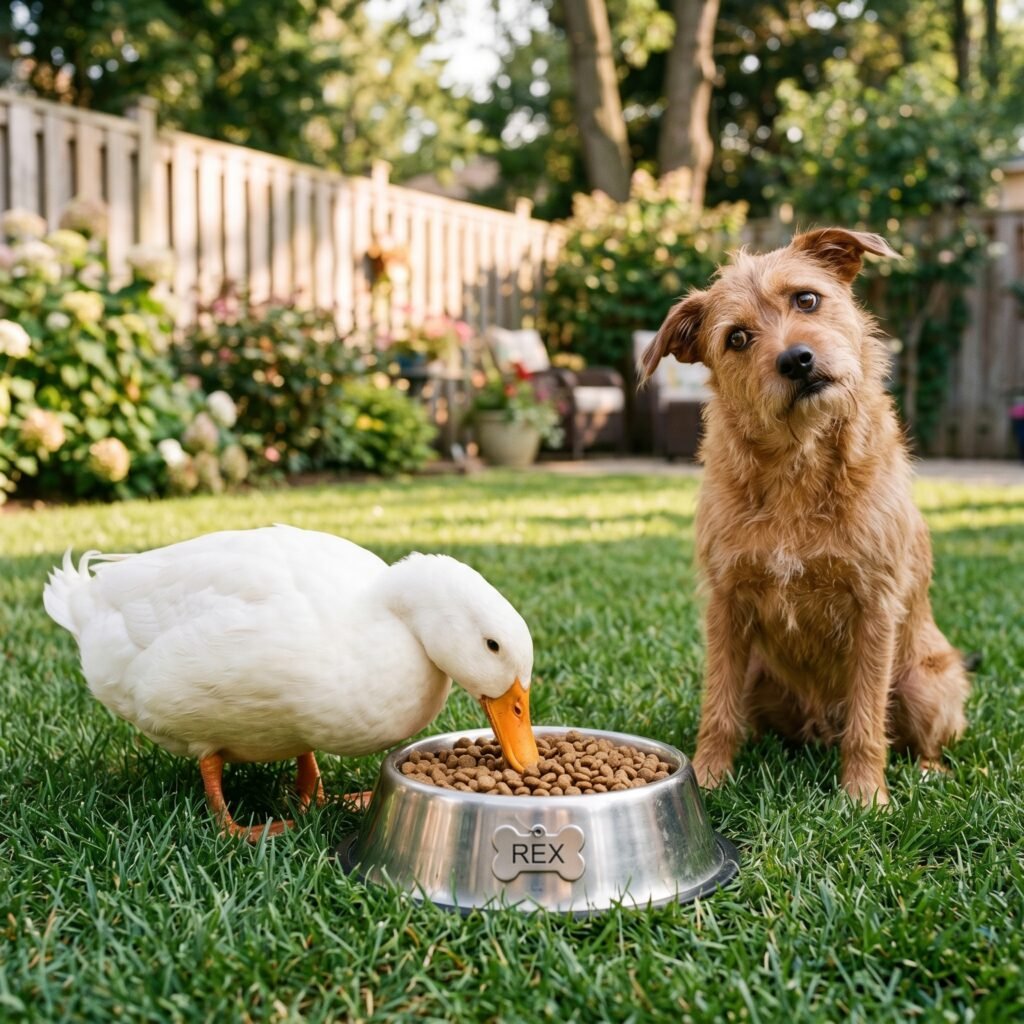
One of the secondary search intents driving traffic to this topic is a question from a very different perspective: can ducks eat dog food? This is a question from duck owners and backyard poultry keepers, not dog owners — and it deserves a clear, accurate answer.
The short answer is: yes, ducks can eat dog food — but with important qualifications that make it a poor long-term choice as a primary diet component.
Dog food — particularly dry kibble — is not toxic to ducks and will not cause immediate harm if a duck consumes some opportunistically. Ducks are omnivores that naturally eat a wide variety of foods including insects, small fish, plants, and seeds, so they are physiologically equipped to process animal protein sources. However, there are several important reasons why dog food should not be a regular or primary food source for ducks:
- Excessive protein content: Dog food is formulated for carnivore-adjacent animals with high protein requirements. Adult ducks need approximately 14% to 16% protein in their diet — significantly lower than the 22% to 30% found in most commercial dog food. Feeding excess protein to ducks can cause a growth disorder in young ducks called “angel wing” — a condition where the wings develop abnormally due to nutritional imbalance during the rapid growth phase
- Wrong micronutrient profile: Dog food is formulated for canine nutritional requirements, not avian ones. Ducks require specific ratios of niacin (significantly higher than dogs), calcium, phosphorus, and other nutrients that are not optimized in dog food formulations
- Inappropriate carbohydrate and fat sources: The fat and carbohydrate composition of dog food is not calibrated for duck metabolic requirements
- Safe as occasional supplement only: In emergency situations where duck-appropriate food is unavailable, a small amount of dog food mixed with water is unlikely to harm adult ducks short-term. But it should never replace a properly formulated poultry or waterfowl feed as the primary diet
For duck owners seeking the best diet for their birds, a commercial waterfowl feed or unmedicated chick starter — supplemented with niacin, fresh greens, and clean water — is the appropriate primary diet rather than any form of dog food.
Duck Dog Food: Ingredients to Look for and Avoid
Whether you’re selecting duck dog food for general quality nutrition or specifically for allergy management, these label-reading guidelines apply:
Ingredients That Belong in Quality Duck Dog Food
- Deboned duck or duck meal listed as the first ingredient — not “poultry” or “poultry meal” which may include chicken and compromise the single-protein structure
- A single clearly identified carbohydrate source — brown rice, oats, sweet potato, or potato (depending on grain vs. grain-free preference)
- Named fat source — duck fat, chicken fat (only if cross-contamination with chicken is not a concern), or salmon oil for omega-3 support
- Natural preservatives — mixed tocopherols and rosemary extract rather than BHA, BHT, or ethoxyquin
- No secondary hidden animal proteins — check for eggs, dairy, fish, or other animal ingredients that could compromise the single-protein structure for allergy management purposes
- AAFCO nutritional adequacy statement covering the correct life stage for your dog
Red Flags in Duck Dog Food Formulas
- “Duck flavor” instead of actual duck — flavor additives are not meaningful protein sources
- Duck listed far down the ingredient panel after multiple grains and starches — indicates low actual duck content
- Multiple protein sources (duck plus chicken, duck plus turkey) — undermines the single-protein structure required for effective allergy elimination
- Artificial colors, flavors, or chemical preservatives
Frequently Asked Questions About Duck Dog Food
Is duck dog food good for dogs with chicken allergies?
Duck can be a good alternative for dogs with chicken allergies — but with an important caveat. Duck and chicken are both poultry, and while they are different species with distinct protein structures, some dogs with confirmed chicken allergies show cross-reactive responses to duck due to shared protein antigens. American Natural Premium’s September 2025 research note specifically states: “Some chicken-allergic dogs tolerate duck well, while others may cross-react. Lamb would be the safer choice for dogs with confirmed poultry allergies.” Always introduce duck dog food gradually for chicken-allergic dogs and monitor carefully for any recurrence of allergy symptoms before committing to a long-term duck-based diet.
Is duck and potato dog food grain-free?
Yes — most duck and potato dog food formulas are grain-free, using potato as the primary carbohydrate source instead of grains. This format is appropriate for dogs with both protein and grain sensitivities. However, owners should be aware of the FDA’s ongoing DCM investigation, which has included potato-based grain-free formulas alongside legume-heavy formulas in its reviewed case data. Discuss long-term grain-free feeding with your veterinarian for any dog with cardiac risk factors.
How do I know if duck is still a novel protein for my dog?
Review your dog’s complete dietary history — including all dry food, wet food, treats, and table food they have consumed over their lifetime. If duck has appeared as a primary or secondary ingredient in any food they have regularly eaten, duck novelty may be compromised for that individual dog. The question is not whether duck sounds exotic — it’s whether your specific dog’s immune system has had meaningful prior exposure to duck protein antigens. When in doubt, consult your veterinarian or a veterinary nutritionist before using duck dog food for elimination diet purposes.
What is the best duck dog food for small breeds?
For small breeds, the most important format consideration in duck dog food is kibble size and caloric density. Small breed formulas with appropriately sized kibble pieces — or wet/freeze-dried formats — are preferable to standard-size kibble that small dogs may not fully chew. Primal Freeze-Dried Duck Nuggets and KOHA Duck wet food are both excellent small-breed-appropriate options. Natural Balance L.I.D. and Zignature Duck also offer small breed or small bites formats within their respective duck lines.
Final Thoughts: Is Duck Dog Food Right for Your Dog in 2026?
For the right dog, duck dog food is a genuinely excellent nutritional choice — rich in iron, omega fatty acids, B vitamins, and highly digestible complete protein, with the palatability advantage that makes picky eaters enthusiastic and the allergen avoidance value that provides meaningful relief for chicken- and beef-sensitive dogs whose dietary history hasn’t included duck.
The most important consideration in 2026 is duck’s diminishing novelty status. As BullySticksDirect’s April 2026 research notes, duck has been normalized in the commercial pet food market to a degree that makes it a genuinely novel protein only for dogs with no prior duck exposure. Assess your dog’s dietary history honestly before selecting duck dog food specifically for allergy management purposes — and if your dog has had significant prior exposure, consider whether a protein with greater genuine novelty (kangaroo, rabbit, bison, or catfish) might serve their immune reset needs more effectively.
For dogs without prior duck exposure and for the millions of owners simply seeking a clean, nutritious, palatable alternative to ubiquitous chicken-based formulas, duck dog food remains one of the most nutritionally compelling and broadly beneficial protein choices available in the premium dog food market in 2026.
Looking for more expert guides on novel protein diets, allergy management, and breed-specific nutrition? Browse our blog for comprehensive, research-backed resources designed to help every dog owner make confident, well-informed feeding decisions.