
Dog High Fiber Foods: Best High Fiber Dog Food for Constipation (2026)
Looking for dog high fiber foods? Discover the best high fiber dog food for constipation, digestive health, and weight management.
What Is High Fiber Dog Food?
High fiber dog food contains elevated levels of dietary fiber compared to standard dog food formulas. Most regular dog foods contain between 2% and 4% crude fiber. High fiber dog foods typically contain 6% to 12% fiber, depending on the formula.
Fiber comes from plant-based ingredients such as:
Pumpkin
Sweet potatoes
Beet pulp
Brown rice
Oats
Peas
Soluble Fiber
Soluble fiber absorbs water and helps soften stool. It also supports beneficial gut bacteria and helps regulate blood sugar levels.
Insoluble Fiber
Insoluble fiber adds bulk to stool and helps move waste through the digestive tract more efficiently.
The best high fiber dog foods combine both types to create balanced digestive support.
Benefits of High Fiber Dog Food
1. Relieves Constipation
One of the most common reasons owners search for high fiber dog food for constipation is to improve bowel regularity. Fiber adds bulk and moisture to stool, helping it pass more easily and consistently.
Dogs with occasional constipation may benefit from moderate increases in dietary fiber.
2. Supports Digestive Health
Fiber feeds beneficial gut bacteria, acting as a prebiotic. A healthy gut microbiome supports nutrient absorption, immune function, and overall well-being.
3. Helps with Weight Management
Fiber increases satiety. Dogs feel fuller for longer without consuming excess calories. This makes higher fiber dog food useful for overweight or less active dogs.
4. Improves Stool Quality
For dogs with loose stool or anal gland issues, fiber can help firm stool, making bowel movements more consistent.
Best High Fiber Dog Foods (Top Picks)
Below are some of the best high fiber dog foods formulated to support digestive health and relieve constipation.
1. Hill’s Science Diet Perfect Digestion
Fiber Content: ~7–8%
Protein: 22%
Pros:
Contains prebiotic fiber blend
Clinically studied digestive support
High-quality ingredients
Cons:
Premium price
Limited flavor variety
Why We Recommend It:
This formula is specifically designed for digestive balance. It contains prebiotic fiber and carefully balanced nutrients to promote regular bowel movements.
2. Royal Canin Gastrointestinal Fiber Response
Fiber Content: ~10%
Protein: 21%
Pros:
Veterinary-recommended
High fiber content
Designed for constipation
Cons:
Requires veterinary guidance
More expensive than standard diets
Why We Recommend It:
This is one of the most effective higher fiber dog food formulas for constipation and chronic digestive issues.
3. Blue Buffalo Natural Healthy Weight
Fiber Content: ~9%
Protein: 20%
Pros:
Good fiber level
Natural ingredients
No artificial preservatives
Cons:
Not specifically medical-grade
Some dogs may require gradual transition
Why We Recommend It:
A good option for dogs needing moderate fiber increase along with weight management support.
4. Purina Pro Plan Weight Management
Fiber Content: ~8%
Protein: 27%
Pros:
High protein
Good fiber balance
Widely available
Cons:
Contains grains
Not grain-free
Why We Recommend It:
Offers balanced fiber while maintaining higher protein levels for muscle support.
5. Wellness CORE Reduced Fat
Fiber Content: ~10%
Protein: 33%
Pros:
High protein
Strong fiber content
Grain-free
Cons:
Premium price
Not ideal for puppies
Why We Recommend It:
Great choice for active dogs needing both protein and fiber support.
How Much Fiber Does a Dog Need?
Most healthy dogs thrive on diets containing 2–4% fiber. High fiber dog foods typically contain 6–12%.
However, more fiber is not always better.
Excess fiber can cause:
Gas
Bloating
Reduced nutrient absorption
Loose stools
Always introduce higher fiber dog food gradually and consult your veterinarian if your dog has ongoing digestive problems.
Signs Your Dog May Need High Fiber Food
Your dog may benefit from higher fiber dog food if you notice:
Frequent constipation
Hard or dry stools
Scooting
Weight gain
Irregular bowel movements
Anal gland problems
If symptoms persist, consult a veterinarian before making dietary changes.
Natural High Fiber Foods for Dogs
In addition to high fiber dog food, you can supplement small amounts of natural fiber-rich foods:
Plain canned pumpkin (no sugar added)
Steamed green beans
Cooked carrots
Sweet potatoes
Oatmeal
Always introduce new foods slowly and in moderation.
When High Fiber Dog Food Is NOT Recommended
High fiber dog food may not be ideal for:
Puppies (unless recommended by a vet)
Highly active working dogs needing high calories
Dogs with certain medical conditions
Dogs that already have loose stools
Too much fiber can worsen some digestive conditions.
How to Transition to High Fiber Dog Food
Switching dog food too quickly can cause digestive upset.
Follow this gradual schedule:
Day 1–2: 25% new food, 75% old food
Day 3–4: 50% new food, 50% old food
Day 5–6: 75% new food, 25% old food
Day 7: 100% new food
Monitor stool consistency and energy levels during transition.
Frequently Asked Questions
Is high fiber dog food good for constipation?
Yes. Fiber helps regulate bowel movements and improves stool consistency, which can relieve mild constipation.
What percentage of fiber is considered high in dog food?
Generally, 6% or higher crude fiber is considered high compared to standard formulas.
Can too much fiber harm dogs?
Yes. Excess fiber can interfere with nutrient absorption and cause bloating or diarrhea.
Is pumpkin good for constipated dogs?
Plain canned pumpkin is a natural source of fiber and can help relieve mild constipation when given in small amounts.
How Fiber Actually Works in a Dog’s Body
Understanding how fiber functions can help you choose the right formula.
When a dog consumes fiber:
Insoluble fiber adds bulk to stool and speeds up intestinal movement.
Soluble fiber absorbs water and forms a gel-like substance that slows digestion slightly and supports beneficial gut bacteria.
Fiber acts as a prebiotic, feeding healthy bacteria in the colon.
It improves stool consistency by balancing moisture levels.
In dogs with constipation, fiber increases stool mass and promotes natural bowel movement. In overweight dogs, fiber slows gastric emptying and increases fullness, reducing overeating.
Ingredients to Look for in High Fiber Dog Food
When choosing high fiber dog food, look beyond the fiber percentage.
The quality of fiber sources matters.
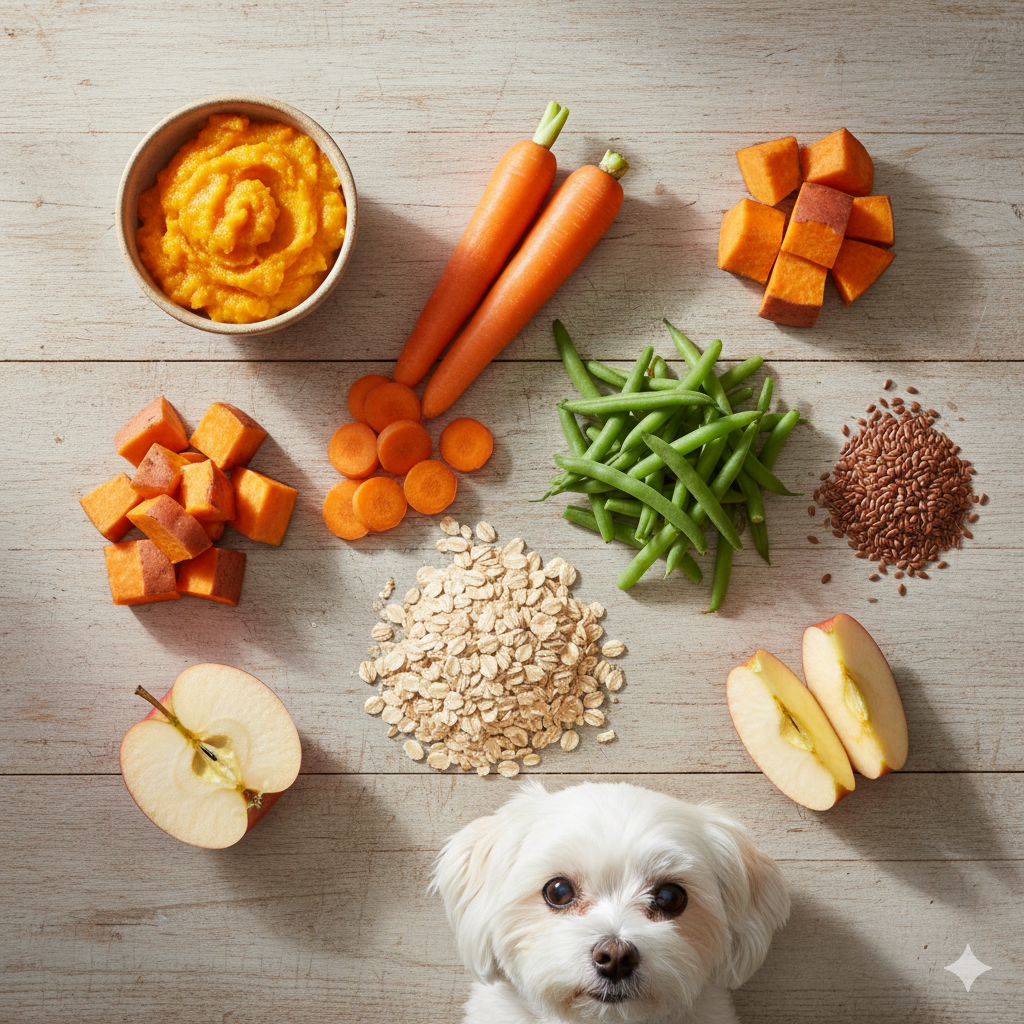
Good Fiber Sources
Pumpkin
Sweet potatoes
Beet pulp (moderate amount)
Brown rice
Oats
Flaxseed
Carrots
Apples
These provide both soluble and insoluble fiber.
Lower Quality Fillers to Be Cautious Of
Excessive corn
Wheat middlings
Soy hulls in large amounts
Unspecified “plant fiber”
Cheap fillers increase fiber but may not provide nutritional benefits.
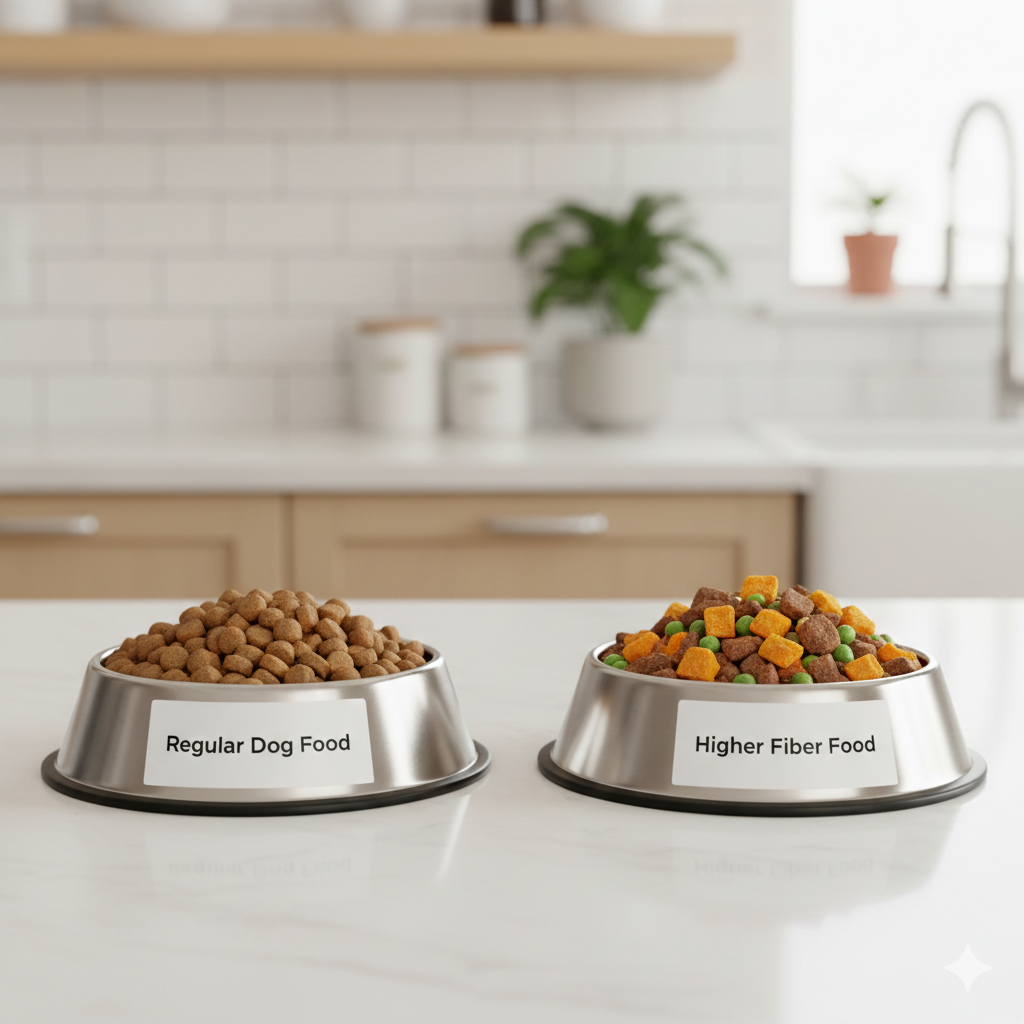
High Fiber Dog Food vs Regular Dog Food
| Feature | Regular Dog Food | High Fiber Dog Food |
|---|---|---|
| Fiber % | 2–4% | 6–12% |
| Purpose | General nutrition | Digestive support, weight control |
| Best For | Healthy adult dogs | Constipation, overweight dogs |
| Satiety Level | Moderate | Higher |
If your dog has normal digestion, switching to higher fiber dog food may not be necessary.
High Fiber Dog Food for Weight Loss
Fiber plays an important role in weight management.
Here’s how:
Increases fullness without extra calories
Slows digestion slightly
Reduces overeating
Supports stable blood sugar levels
Many veterinary weight-loss formulas are also higher in fiber.
If your dog is overweight, high fiber dog food may help alongside proper portion control and exercise.
High Fiber Dog Food for Senior Dogs
Senior dogs often experience:
Slower digestion
Reduced activity
Increased constipation risk
Moderate fiber levels can help regulate bowel movements in older dogs.
However, extremely high fiber diets may not be ideal for seniors needing higher calorie density.
Balance is key.
How to Read Fiber on Dog Food Labels
When reviewing dog food labels:
Look at:
“Crude Fiber” percentage under the Guaranteed Analysis section.
Important:
Crude fiber is only an estimate and does not represent total dietary fiber.
Also examine:
Ingredient list order
Presence of natural fiber sources
Added prebiotics
If fiber is above 8–10%, it is considered a higher fiber formula.
Common Mistakes When Choosing High Fiber Dog Food
Increasing Fiber Too Quickly
This can cause bloating or diarrhea.
Ignoring Protein Levels
Some high fiber foods reduce protein. Ensure protein remains adequate.
Using Fiber Without Identifying Root Cause
Constipation can be caused by dehydration, stress, medical conditions, or lack of exercise.
Fiber helps, but it’s not always the complete solution.
Don’t Forget Hydration
Fiber absorbs water.
If your dog eats high fiber food but doesn’t drink enough water, constipation may worsen.
Always ensure:
Fresh water available at all times
Consider adding wet food if hydration is low
Wet vs Dry High Fiber Dog Food
Dry kibble can contain higher fiber percentages more easily.
Wet food may:
Improve hydration
Be easier to digest
Contain slightly lower fiber levels
For dogs prone to constipation, combining moderate fiber with increased moisture may be more effective than fiber alone.
Ideal Fiber Range by Condition
| Condition | Recommended Fiber Range |
|---|---|
| Normal healthy dog | 2–4% |
| Mild constipation | 5–8% |
| Chronic constipation (vet supervised) | 8–12% |
| Weight management | 6–10% |
Always consult your veterinarian for persistent digestive problems.
Conclusion (Stronger Ending)
Choosing the best high fiber dog food can significantly improve digestive health, stool consistency, and even weight control. However, fiber should be increased thoughtfully and gradually.
Look for balanced formulas with quality fiber sources, adequate protein levels, and no unnecessary fillers. Monitor your dog’s response carefully and adjust as needed.
When chosen correctly, higher fiber dog food can be a safe and effective way to support your dog’s overall digestive wellness.